

.svg)

Primary location
North Hollywood, LA
-
5430 Cahuenga Blvd,
North Hollywood, Los Angeles, CA 91601 - (818) 505-1442
Understanding When It's Safe, Risky, or Downright Dangerous
Here is likely what has happened: Your car may have been involved in a minor or even major accident. The body got damaged, and you're wondering if it is safe to drive it.
Now, think of it this way: Is it safe for anyone to walk with a broken backbone?
The vehicle's body is its backbone. Damage compromises safety, alignment, and performance. That is why every car owner needs to understand what's at stake when driving a car with body damage.
This guide explains when it is safe, when it is risky, and when to stop driving immediately.
Oh, little tiny dents count as much as larger, severe dents. This is because, if left unaddressed, tiny dents can escalate into structural damage.
Scratches also count as damage regardless of their severity.
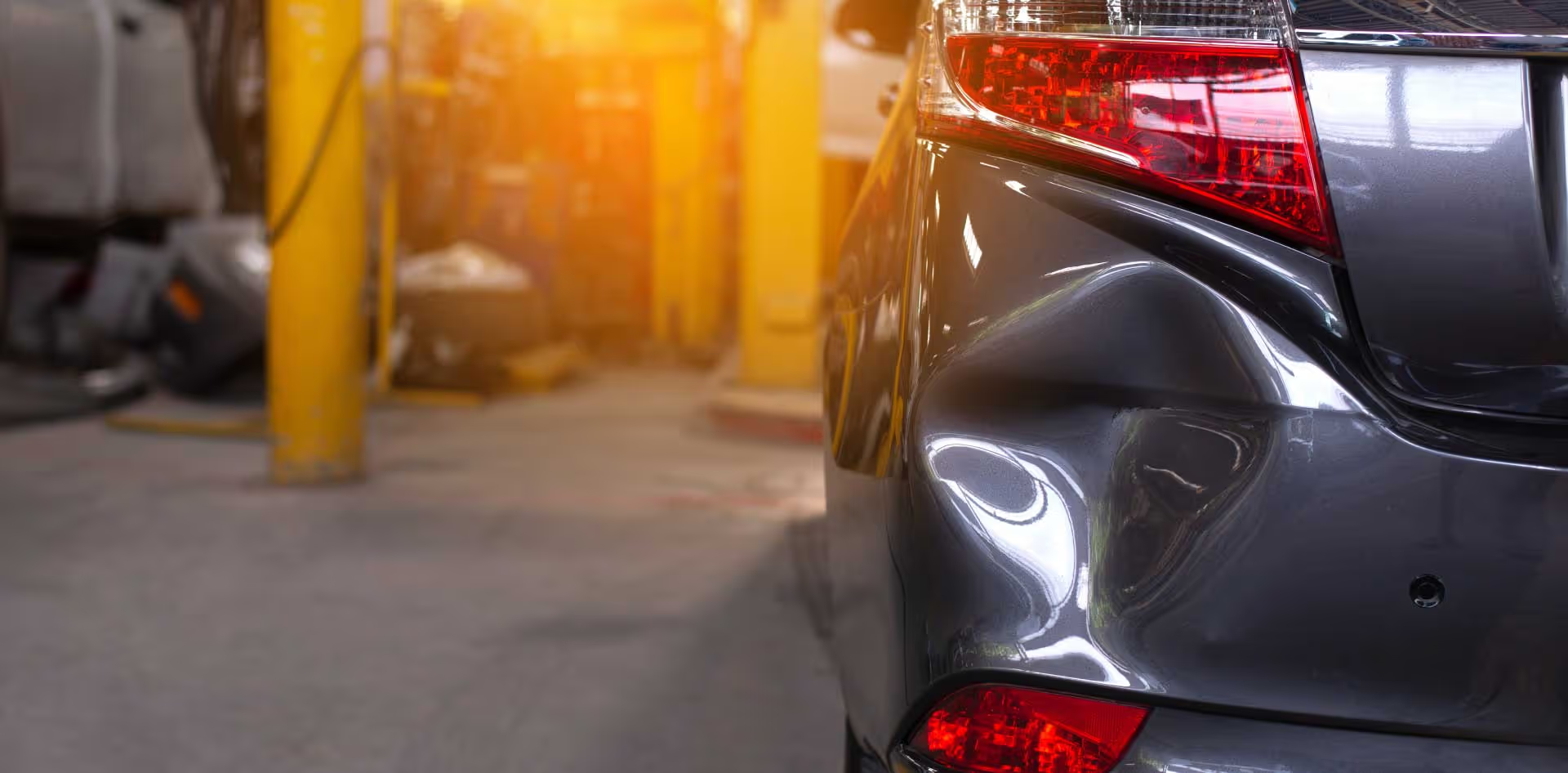
Cracked bumper? That's also body damage.
The bent panel goes deeper and is apparently considered body damage.
These two parts are considered severely damaged.
While shallow scratches and dents (that do not expose the car's panel) are generally considered cosmetic damage, major cracked bumpers, bent panels, and misaligned doors or hoods are strictly structural damage that may affect vehicle safety.
Driving with body damage is unsafe, but there are exceptional cases that allow car owners to drive the car away from the accident scene safely and later take it to the repair shop.
The scratch is shallow, the paint chips, and nothing much. You can still drive your car.
A small, shallow dent that doesn't affect the panel or light is minor body damage.
Damage that doesn't affect critical safety systems includes lights & signals, sensors, crumple zones, ADAS cameras, and brakes.
Note: Don't ignore the damage even if the car is safe to drive for the moment. Get professional help and avoid lethal risks.
We've all seen many cars with a fraction of the body frame looking slightly or severely deformed (misshapen) after an accident. Driving in such vehicles is highly dangerous.
Crumple zone damage is usually a deformity in the front and rear of a car during an accident.
When the car crushes inwards from the front (bonnet) of the vehicle, affecting the driver, the airbags often deploy. Don't drive that car.
When a body panel is loose, it's likely to fall off down the road. Immediately you notice any loose panel; ensure a professional fastens it before you continue driving the car. Keep you and everyone on the road out of harm's way.
Don't drive when any of these are compromised:
Here's how you know:
This poses a risk to pedestrian safety and the potential for the road to partially collapse during driving.
After a collision, many car owners continue driving their cars, justifiably, because they only see minor cosmetic damage. They refuse to get a professional inspection.
More often than not, the significant damages are underneath - hidden.
The damaged under-panel, bent suspension components, and sensor alignment are invisible. Don't just assume your car is perfect; have it inspected by a professional after a collision.
According to most countries' laws, there's a general standard acceptable for a car's roadworthiness to ensure the safety of all on the road. In the UK, the Road Traffic Act 1988 stipulates that any three-year-old vehicle must pass specific tests to ascertain its roadworthiness.
Driving a vehicle with any of the aforementioned damages attracts a strict fee (fine). In the UK, it's about £100 for minor violations.
Immediately after a collision, insurance companies are supposed to be notified of any damage that compromises a car's roadworthiness. Driving a roadworthy-violated car can result in forfeiture of a claim, especially if the damage leads to an accident.
This depends on the severity and location of the damage. Realistically, you can temporarily drive a cosmetically damaged car after getting a professional inspection verifying no further damage.
Moreover, addressing it with the utmost urgency is safe and cost-effective.
Carefully review these checklists on your car, and you will instantly know whether it's safe to drive or if you should seek immediate help.
Can you see clearly through all the windshields and windows?
Are all light signals working perfectly?
Any fluid dripping under the car?
Is the tire pressure normal, or are the tires deflated?
Is there any safety system warning light?
Not. It depends on the damage. If the damage is minor, like a scratch or a shallow dent, you can drive but not for long. But things come differently when you have damaged frame components, deployed airbags, broken lights, or compromised crumple zones. Keep safe by conducting a safety checklist before driving away from the scene.
The main difference is the volume of the damage and the consequences it may cause. Cosmetic damage includes shallow scratches and small dents. Therefore, there is a very low risk for damage to panels or safety systems. Structural damage, which includes bent frames, misaligned body panels, and crumple zone deformities, makes it extremely unsafe to drive.
You can't always see critical damage to under-panels, suspension components, or sensor alignment. Even if the exterior looks fine, always get a professional inspection after any collision to identify hidden structural or mechanical issues.
Absolutely. If there is body damage that remains for long, it badly affects resale value. So, try to avoid damages or turn to a professional repair ASAP.
It is unsafe to drive a car with body damage, especially when it is not confirmed to be "only minor cosmetic damage." Knowing when it's safe or not to drive a damaged car makes all the difference, protecting the driver, passengers, and other road users from danger.
If your car has body damage, at Regal Repair, we've successfully worked on 100s of vehicles. Choosing Regal Repair means excellent repair service that restores your car to a safer, peak-performing condition.
Get Your Free Safety InspectionSave even more at Regal Repair for all your collision repair needs. Take advantage of our special collision repair coupons and deals to get your vehicle back in shape without overspending. Whether it's a minor dent or major damage, our offers provide affordable, high-quality repair solutions. Don't miss out on these limited-time discounts — explore our deals today and ensure your car receives the best care at the best price! Please mention the website coupon at the time of the vehicle estimate.


.webp)
.png)
.webp)
.avif)