

.svg)



Primary location
North Hollywood, LA
-
5430 Cahuenga Blvd,
North Hollywood, CA 91601 - (818) 505-1442
Toyota drivers who want their car to last a long time should understand the importance of transmission fluid. Fresh transmission fluid keeps gears lubricated and reduces the risk of premature transmission damage. But when should you change it, how much does it cost, and what does the service actually involve? In this guide, we'll break down what Toyota owners need to know about fluid changes, including when to do them, what they cost, and how to do them.
Let’s dive in.
Transmission fluid is a specialized lubricant and hydraulic fluid that helps a car's transmission transfer engine power smoothly while protecting its internal components. It does much more than keep the gears greased, and here is why it matters:
For every Toyota out there, there's no one-size-fits-all transmission fluid change interval. Toyota's maintenance schedule varies by model, transmission type, and driving conditions. The safest rule is to follow the manufacturer's recommendation. You will find it on the maintenance guide or manual for your VIN/model.
For example, Toyota's 2025 Crown maintenance guide lists automatic transmission fluid replacement at 60,000 miles (96,560 km) under its special operating conditions.
On the other hand, manual transmission is different.
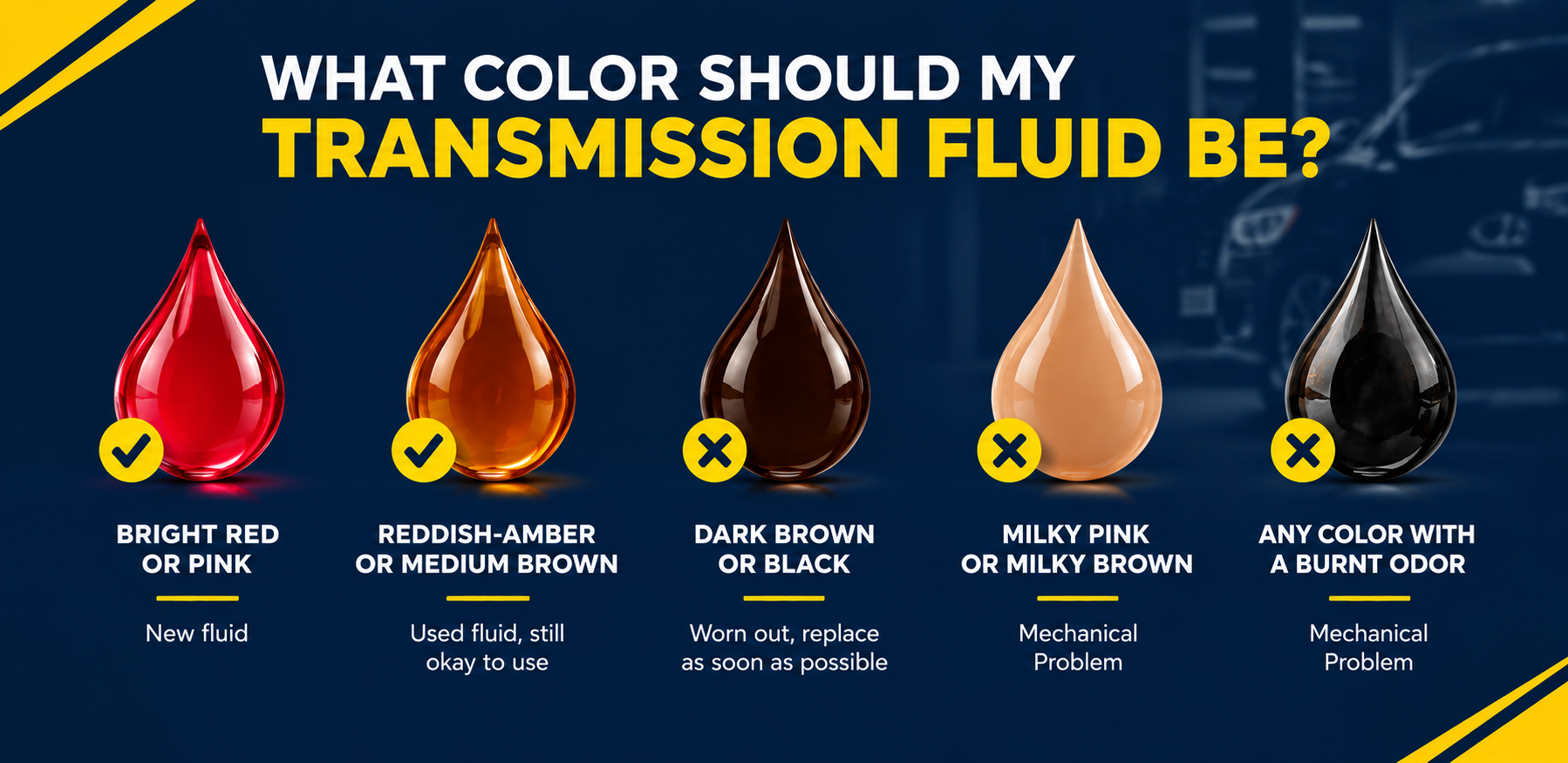
These are the straightforward warning signs indicating you need a transmission fluid change.
In the U.S., a typical Toyota transmission fluid change costs roughly $220–$360. The actual price can vary slightly by model, transmission, location, and the type of service performed.
According to RepairPal, in August 2026, the average cost of a transmission fluid change across vehicles is approximately $282–$343, including $131–$192 in labor and $152 in parts.
A proper transmission fluid service is more than simply draining old fluid and pouring in new fluid. Here is exactly how to do it:
The first step is to identify the correct fluid specification, service procedure, fluid capacity, and whether the transmission uses a replaceable filter.
Bring the transmission temperature to the specified manufacturer's temperature. Remove the drain plug or loosen/remove the transmission pan if there is no drain plug.
Collect and inspect the old oil for metal particles, excessive debris, burnt odor, coolant contamination, or other abnormalities. Your findings can point you to an underlying transmission problem rather than simply an old fluid issue.
If the transmission uses a serviceable pan-mounted filter, you can service the pan. Check for accumulated debris and excessive metal contamination. Service is necessary.
Now, the serviced or new filter, gasket, and seals should be reinstalled as specified, followed by the pan and drain plug. Most importantly, the fasteners are tightened to the manufacturer’s torque specification and sequence.
Now, add new fluid in accordance with the manufacturer's specification.
This is a significant stage.
You or the technician may need to:
Check and verify the transmission for surrounding leaks, fluid level, and how it affects the gear shift. Testing and final inspection are paramount for any Repair.
A DIY transmission fluid change costs less and saves on labor, but if done wrong, it is unforgiving. The major trade-off here is lower fluid change cost vs. greater risk of using the wrong fluid, setting the wrong fluid level, or missing an underlying transmission problem.
DIY Advantages
Risks:
Toyota transmissions can require very specific fluids. E.g., Toyota specifies Toyota Genuine CVT Fluid FE for the 2024 Corolla CVY. Using another fluid can cause abnormal noise or vibration or damage the CVT.
Many DIY fluid changes go wrong due to underfilling or overfilling. There is a specified quantity required.
A drain-and-fill doesn't necessarily replace all the old fluid. DIY often overlooks filter/strainer inspection, pan debris, leaks, or other signs of transmission problems.
Professional Service: Higher Cost, Lower Risk.
A qualified technician brings:
This is important, especially on modern Toyota transmissions, where fluid type and level-setting procedure can be transmission-specific.
Skipping transmission fluid changes can lead to long-term consequences, including vehicle overheating, wear and tear on surrounding components, and eventual transmission failure.
There is no single interval that applies to every Toyota, as it varies by model, transmission type, and driving conditions, so follow the manufacturer's recommendations in your owner's manual or VIN-specific maintenance guide.
In the U.S., a typical Toyota transmission fluid change costs roughly $220 to $360. However, the price varies based on the vehicle model, transmission type, location, and specific service performed. According to RepairPal (August 2026), the national average across vehicles ranges from $282 to $343 (including $131–$192 for labor and around $152 for parts).
Yes, you can. It helps you save on labor costs if you have the proper tools and a suitable workspace, but it also carries significant risks: wrong fluid, incorrect fluid levels and incomplete service .
Astandard transmission fluid change (drain-and-fill) involves inspecting the system, draining the fluid from the pan, servicing or replacing the filter/gasket if applicable, and refilling it with fresh, correct-spec fluid.
Ignoring transmission fluid changes leads to fluid degradation and overheating. Over time, this can lead to performance issues, acceleration in wear of tear on internal clutches and surrounding parts as well as accumulated metal particles, burnt fluid, and eventual total transmission failure.
Save even more at Regal Repair for all your collision repair needs. Take advantage of our special collision repair coupons and deals to get your vehicle back in shape without overspending. Whether it's a minor dent or major damage, our offers provide affordable, high-quality repair solutions. Don't miss out on these limited-time discounts — explore our deals today and ensure your car receives the best care at the best price! Please mention the website coupon at the time of the vehicle estimate.


.webp)
.png)
.webp)
.avif)
.webp)