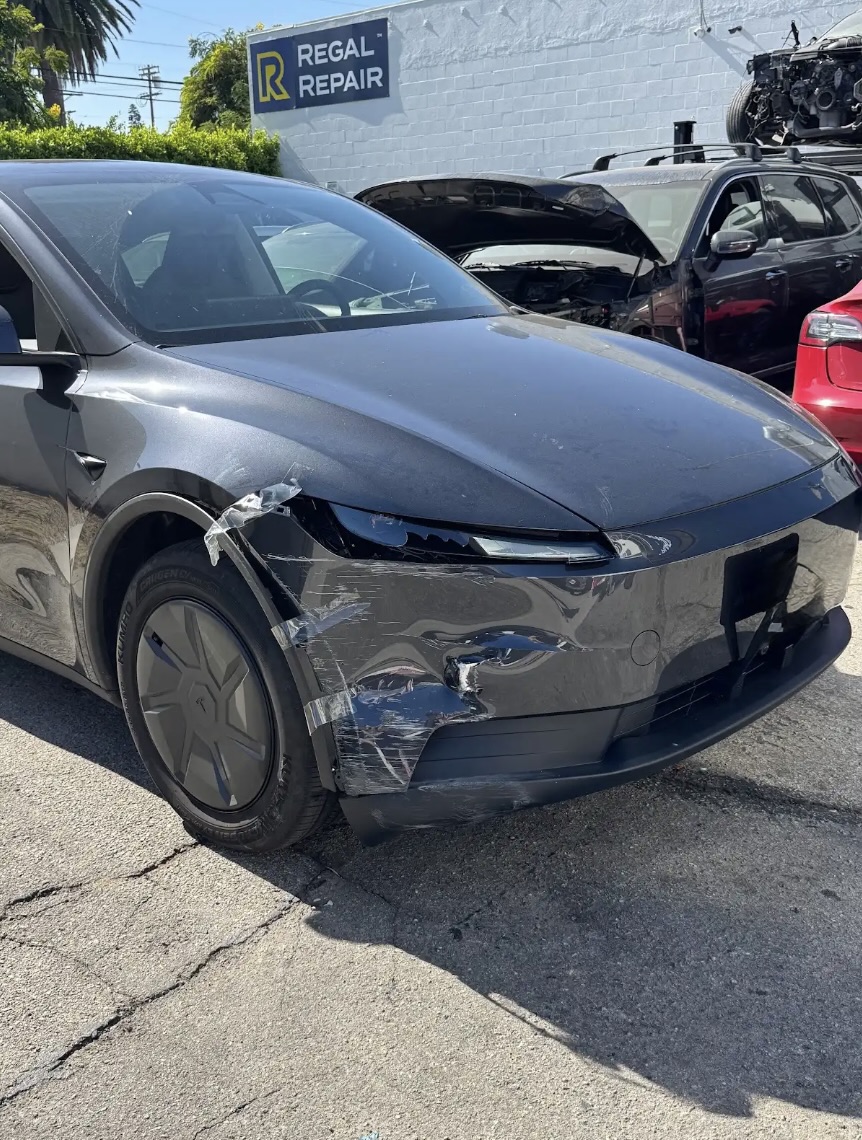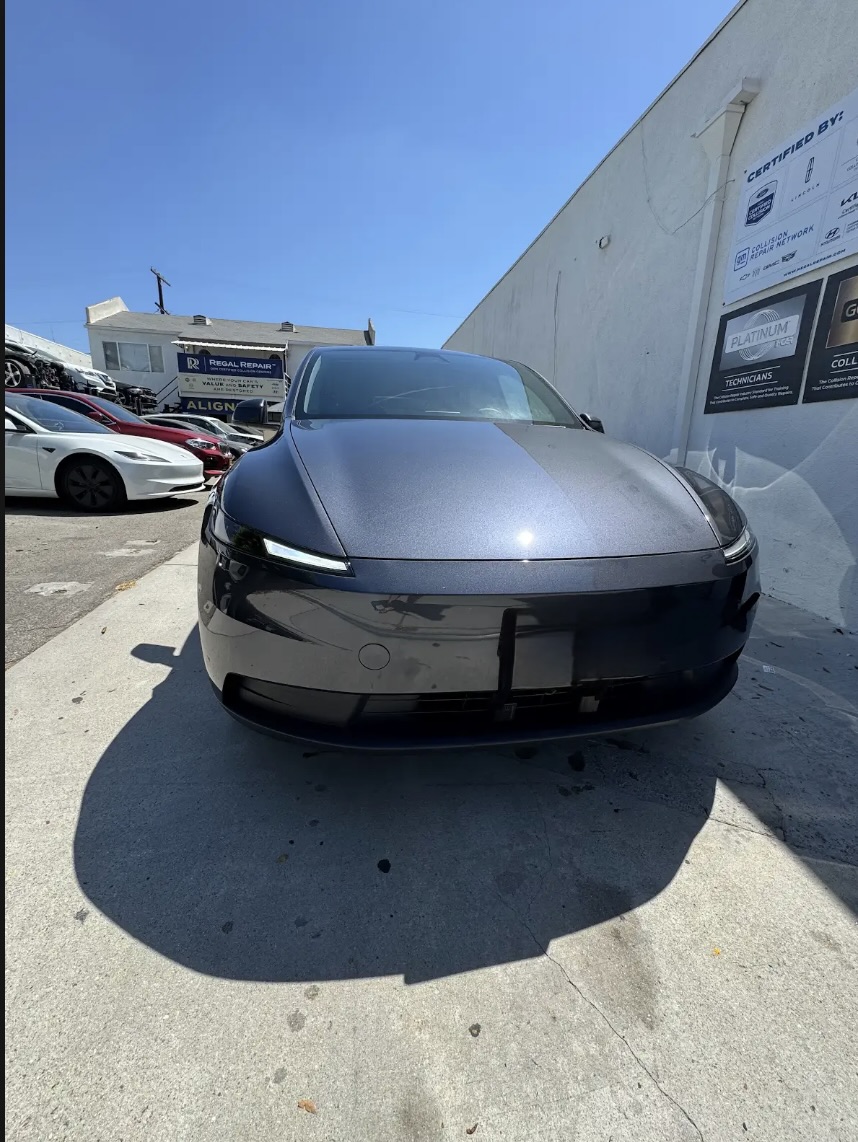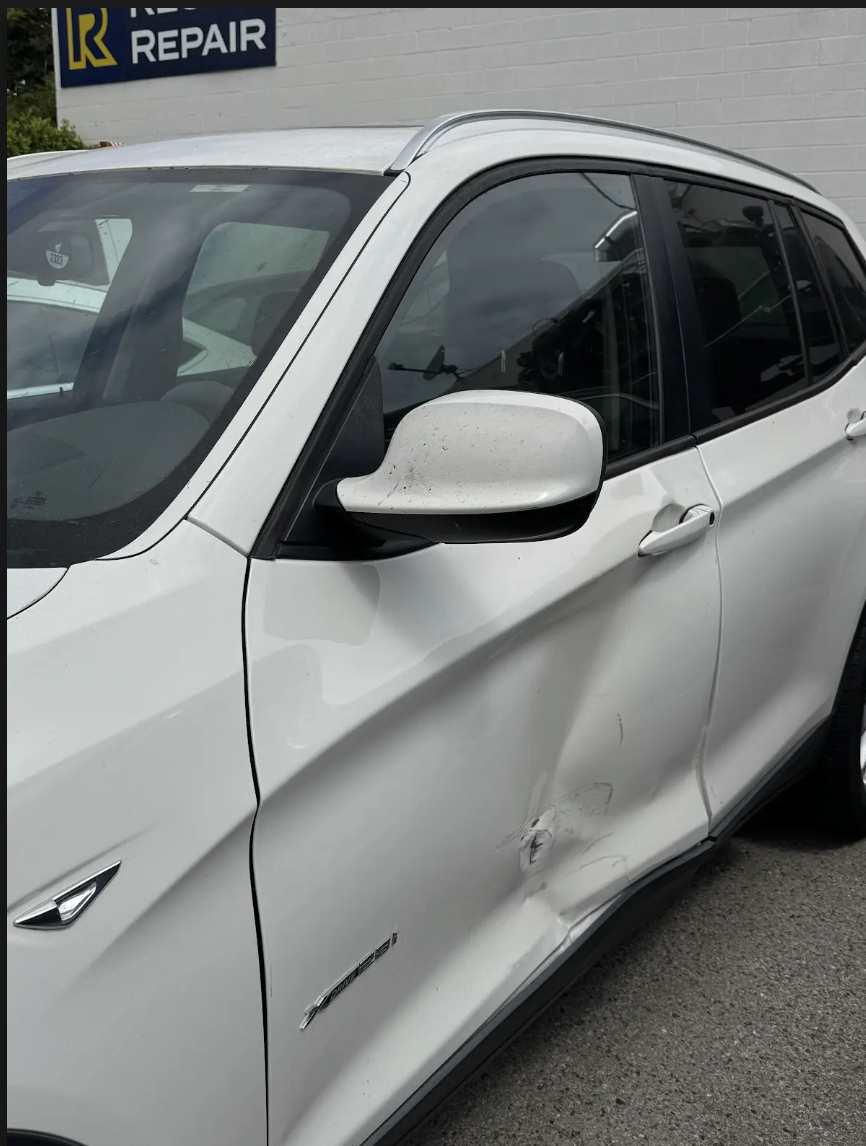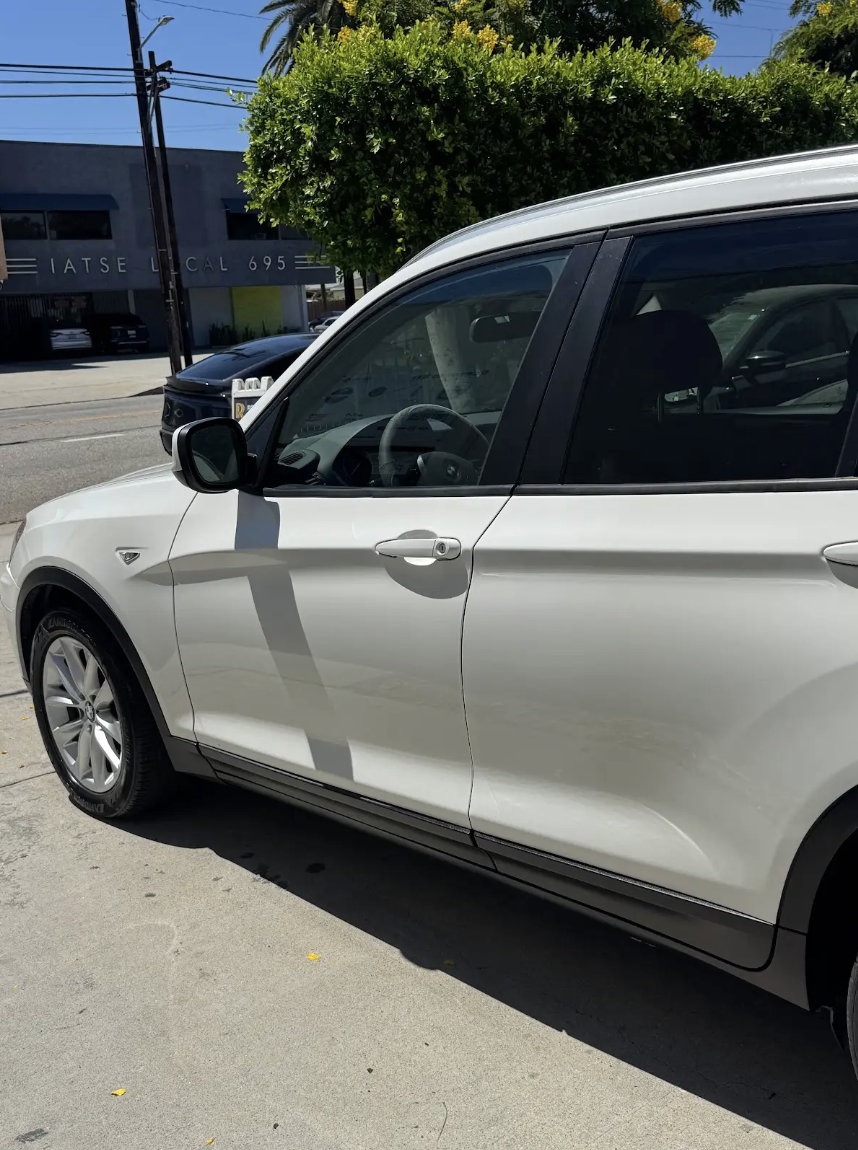


More vehicles today are built with aluminum body panels and structures to reduce weight while maintaining strength and efficiency. But repairing aluminum is very different from repairing steel and it requires specialized training, equipment, and techniques.
At Regal Repair, our technicians are trained to safely repair aluminum vehicles and restore them to their proper condition after a collision.
Why Aluminum Repair Is Different
Aluminum behaves differently from steel when it is bent, heated, or repaired. It requires specialized tools and repair methods to prevent damage and maintain the vehicle’s structural integrity.
Aluminum is commonly found in vehicles from brands such as Ford, Jaguar, Land Rover, Audi, Tesla, BMW, Mercedes-Benz, Cadillac, Chevrolet, Porsche, and Alfa Romeo.
Why Choose Regal Repair for Aluminum Collision Repair?
Specialized Equipment Our shop uses dedicated tools and equipment designed specifically for precise aluminum repairs.
Trained Technicians Our technicians receive specialized training to understand how aluminum reacts to impact, heat, and repair processes.
Dedicated Aluminum Repair Area Our isolated aluminum repair area helps prevent steel particles from contaminating aluminum surfaces and causing corrosion.
Genuine Parts When replacement is necessary, we use quality parts designed to meet your vehicle’s specifications.
Safety First Proper aluminum repair is essential to maintaining your vehicle’s strength, safety, and performance. We follow strict repair procedures to help ensure a safe, high-quality result.
Complete Aluminum Body Repair Services
Whether your vehicle has a minor dent or significant collision damage, Regal Repair can help restore its appearance and structural integrity.
Our aluminum repair services include:
Aluminum dent repair
Aluminum panel replacement
Aluminum welding
Structural repairs and realignment
Collision damage repair
Surface refinishing
Expert Aluminum Collision Repair You Can Trust
Aluminum vehicles require more than standard body repair. They require the right training, equipment, and repair techniques.
Choose Regal Repair for professional aluminum auto body repair and get back on the road with confidence.
Aluminium repair — your questions
What owners ask once they find out their car isn't steel.
How do I know if my car is aluminium?
Put a fridge magnet on it. It sticks to steel. It doesn't stick to
aluminium. Try the hood, then a door, then the roof — a lot of cars are aluminium in some
places and steel in others.
That mix is the reason a repair has to be planned rather than assumed. One vehicle can need
both approaches, in different parts of the shop, on the same job.
Why does aluminium repair cost more than steel?
Three reasons, and none of them is a markup.
It takes longer. Steel has memory — worked correctly it wants to return to
its original shape. Aluminium doesn't. It work-hardens as it moves and cracks if pushed too
far, so it's shaped slowly, in stages, with controlled heat.
It needs separate equipment. Aluminium-specific tools, dedicated dust
extraction, and a work area isolated from steel. That's a facility investment, not a
line item.
More parts are replace-only. Where steel can often be repaired, aluminium
components — and castings especially — are more frequently specified for replacement by the
manufacturer.
What's an "isolation bay" and does it actually matter?
It matters more than almost anything else on this page. Steel dust and particles are
everywhere in a body shop — grinding, cutting, welding. When those particles embed in an
aluminium panel, they cause galvanic corrosion: the aluminium starts
breaking down around each speck.
It doesn't show immediately. It shows up as blistering and pitting months later, long after
the repair looked perfect at collection, and by then it's very hard to attribute to the
shop that caused it.
The prevention is physical separation — a dedicated area, dedicated tools that never touch
steel, and its own extraction. We have one. Ask to see it when you drop the car off;
we'd rather show you than tell you.
Can an aluminium dent be fixed without repainting?
Sometimes — but it's harder than on steel and fewer shops will attempt it. Paintless dent
repair works by pushing metal back into shape from behind. Aluminium resists that: it's
stiffer in the direction you need it to move, work-hardens as you go, and won't spring back
the way steel does.
A shallow dent in an aluminium hood with the paint intact is often still a candidate. A
sharp one, or one on a body line, usually isn't.
We'll tell you honestly which you have. When paintless is possible it's faster and cheaper
for you, so there's no reason for us to pretend otherwise.
Can aluminium be welded, or does it get glued?
Both, depending on what the manufacturer specifies for that joint — and increasingly,
neither in the conventional sense.
Aluminium can be welded, but it needs different equipment and different technique from
steel, and too much heat permanently weakens the surrounding metal. That's why manufacturers
increasingly join aluminium structures with structural adhesives, self-piercing
rivets and flow-drill screws instead.
You also can't weld aluminium to steel at all — so on a mixed-material car, the joints
between the two are always mechanical or bonded. Getting that right isn't optional; it's
what holds the car together in the next collision.
How do I know a shop can actually do aluminium properly?
Ask three questions, and you'll learn a lot from how they're answered:
"Can I see your aluminium area?" A shop with a genuine isolation bay will
walk you over. One without will explain why that isn't necessary.
"Are you certified by a manufacturer that builds aluminium vehicles?"
Ford's aluminium-bodied trucks and Tesla's aluminium-intensive models both require specific
manufacturer certification to repair correctly — so those certifications say something
concrete about capability rather than being decoration.
"How will you join it?" The answer should reference what the manufacturer
specifies for that panel, not a general preference.
Aluminium repair — your questions
What owners ask once they find out their car isn't steel.
How do I know if my car is aluminium?
Put a fridge magnet on it. It sticks to steel. It doesn't stick to
aluminium. Try the hood, then a door, then the roof — a lot of cars are aluminium in some
places and steel in others.
That mix is the reason a repair has to be planned rather than assumed. One vehicle can need
both approaches, in different parts of the shop, on the same job.
Why does aluminium repair cost more than steel?
Three reasons, and none of them is a markup.
It takes longer. Steel has memory — worked correctly it wants to return to
its original shape. Aluminium doesn't. It work-hardens as it moves and cracks if pushed too
far, so it's shaped slowly, in stages, with controlled heat.
It needs separate equipment. Aluminium-specific tools, dedicated dust
extraction, and a work area isolated from steel. That's a facility investment, not a
line item.
More parts are replace-only. Where steel can often be repaired, aluminium
components — and castings especially — are more frequently specified for replacement by the
manufacturer.
What's an "isolation bay" and does it actually matter?
It matters more than almost anything else on this page. Steel dust and particles are
everywhere in a body shop — grinding, cutting, welding. When those particles embed in an
aluminium panel, they cause galvanic corrosion: the aluminium starts
breaking down around each speck.
It doesn't show immediately. It shows up as blistering and pitting months later, long after
the repair looked perfect at collection, and by then it's very hard to attribute to the
shop that caused it.
The prevention is physical separation — a dedicated area, dedicated tools that never touch
steel, and its own extraction. We have one. Ask to see it when you drop the car off;
we'd rather show you than tell you.
Can an aluminium dent be fixed without repainting?
Sometimes — but it's harder than on steel and fewer shops will attempt it. Paintless dent
repair works by pushing metal back into shape from behind. Aluminium resists that: it's
stiffer in the direction you need it to move, work-hardens as you go, and won't spring back
the way steel does.
A shallow dent in an aluminium hood with the paint intact is often still a candidate. A
sharp one, or one on a body line, usually isn't.
We'll tell you honestly which you have. When paintless is possible it's faster and cheaper
for you, so there's no reason for us to pretend otherwise.
Can aluminium be welded, or does it get glued?
Both, depending on what the manufacturer specifies for that joint — and increasingly,
neither in the conventional sense.
Aluminium can be welded, but it needs different equipment and different technique from
steel, and too much heat permanently weakens the surrounding metal. That's why manufacturers
increasingly join aluminium structures with structural adhesives, self-piercing
rivets and flow-drill screws instead.
You also can't weld aluminium to steel at all — so on a mixed-material car, the joints
between the two are always mechanical or bonded. Getting that right isn't optional; it's
what holds the car together in the next collision.
How do I know a shop can actually do aluminium properly?
Ask three questions, and you'll learn a lot from how they're answered:
"Can I see your aluminium area?" A shop with a genuine isolation bay will
walk you over. One without will explain why that isn't necessary.
"Are you certified by a manufacturer that builds aluminium vehicles?"
Ford's aluminium-bodied trucks and Tesla's aluminium-intensive models both require specific
manufacturer certification to repair correctly — so those certifications say something
concrete about capability rather than being decoration.
"How will you join it?" The answer should reference what the manufacturer
specifies for that panel, not a general preference.
Frequently Asked Questions about Aluminum Vehicles
How do I know if my car is aluminium?
Put a fridge magnet on it. It sticks to steel. It doesn't stick to aluminium. Try the hood, then a door, then the roof — a lot of cars are aluminium in some places and steel in others.
That mix is the reason a repair has to be planned rather than assumed. One vehicle can need both approaches, in different parts of the shop, on the same job.
Why does aluminium repair cost more than steel?
Three reasons, and none of them is a markup.
It takes longer. Steel has memory, worked correctly it wants to return to its original shape. Aluminium doesn't. It work-hardens as it moves and cracks if pushed too far, so it's shaped slowly, in stages, with controlled heat.
It needs separate equipment. Aluminium-specific tools, dedicated dust extraction, and a work area isolated from steel. That's a facility investment, not a line item.
More parts are replace-only. Where steel can often be repaired, aluminium components — and castings especially — are more frequently specified for replacement by the manufacturer.
What's an "isolation bay" and does it actually matter?
It matters more than almost anything else on this page. Steel dust and particles are everywhere in a body shop: grinding, cutting, welding. When those particles embed in an aluminium panel, they cause galvanic corrosion: the aluminium starts breaking down around each speck.
It doesn't show immediately. It shows up as blistering and pitting months later, long after the repair looked perfect at collection, and by then it's very hard to attribute to the shop that caused it.
The prevention is physical separation, a dedicated area, dedicated tools that never touch steel, and its own extraction. We have one. Ask to see it when you drop the car off; we'd rather show you than tell you.
Can an aluminium dent be fixed without repainting?
Sometimes, but it's harder than on steel and fewer shops will attempt it. Paintless dent repair works by pushing metal back into shape from behind. Aluminium resists that: it's stiffer in the direction you need it to move, work-hardens as you go, and won't spring back the way steel does.
A shallow dent in an aluminium hood with the paint intact is often still a candidate. A sharp one, or one on a body line, usually isn't.
We'll tell you honestly which you have. When paintless is possible it's faster and cheaper for you, so there's no reason for us to pretend otherwise.
Can aluminium be welded, or does it get glued?
Both, depending on what the manufacturer specifies for that joint and increasingly, neither in the conventional sense.
Aluminium can be welded, but it needs different equipment and different technique from steel, and too much heat permanently weakens the surrounding metal. That's why manufacturers increasingly join aluminium structures with structural adhesives, self-piercing rivets and flow-drill screws instead.
You also can't weld aluminium to steel at all, so on a mixed-material car, the joints between the two are always mechanical or bonded. Getting that right isn't optional; it's what holds the car together in the next collision.
How do I know a shop can actually do aluminium properly?
Ask three questions, and you'll learn a lot from how they're answered:
"Can I see your aluminium area?" A shop with a genuine isolation bay will walk you over. One without will explain why that isn't necessary.
"Are you certified by a manufacturer that builds aluminium vehicles?" Ford's aluminium-bodied trucks and Tesla's aluminium-intensive models both require specific manufacturer certification to repair correctly so those certifications say something concrete about capability rather than being decoration.
"How will you join it?" The answer should reference what the manufacturer specifies for that panel, not a general preference.
Our clients trust Regal Repair for quality, transparency, and exceptional service. From start to finish, we're committed to delivering a smooth repair experience and results that exceed expectations-every time."
Brands we are certified to repair
I-CAR Gold Class — held by about 15% of collision repair shops
Gold Class obliges every technician involved in collision repair to complete training every single year: hidden damage, repair-versus-replace decisions, airbag and seatbelt inspection, and technology that did not exist last model year.
I-CAR Platinum technicians and VIN-documented repairs
Our technicians hold I-CAR Platinum recognition and ASE certification. Completed repairs are documented against the vehicle's VIN and secured for the life of the car, so a future buyer or appraiser can see exactly how the work was done.
Manufacturer certification means the automaker has audited Regal Repair's tooling, technician training and documented repair procedures against its own requirements. BMW, MINI and Tesla work is handled as a specialisation rather than under a manufacturer certification programme, and is labelled that way here. All manufacturer logos and trademarks are the property of their respective owners.
We Work With All Known Insurance Companies
All insurance claims accepted
We work with every carrier — and we answer only to you
Our certified estimators coordinate directly with your adjuster: the estimate, the supplement for hidden damage, the photographs and the repair documentation. Regal Repair is independent of every insurer on this list, so the repair plan is written to the manufacturer's procedure, not to a claims target.
Call the police and get a report number, photograph the scene and the other vehicle, and collect witness details before anyone leaves. Then call us — we can start the claim, arrange the tow and speak to your insurer before you do.
These are the carriers our estimators work with most often — but we accept every insurance claim, whether or not your insurer appears here, and you are free to choose your own repair facility regardless of what a carrier suggests. Regal Repair is not an agent of, and is not endorsed by, any insurance company listed. All insurer logos and trademarks are the property of their respective owners.