

.svg)

Primary location
North Hollywood, LA
-
5430 Cahuenga Blvd,
North Hollywood, Los Angeles, CA 91601 - (818) 505-1442
Three groups of individuals need to understand the daily routine of an autobody technician. Car owners looking to understand the standardized repair routine that delivers results and peace of mind; technicians (and students) looking to understand typical repair procedures to up their game; and insurance companies seeking competent auto repair technicians to partner with.
Whatever category you fall under, this blog post gives a breakdown of auto technician routines, what happens behind the scenes, and what goes into 95% of successful auto repairs.
Let's unveil it all.
Morning Vehicle Inspection and Assessment
There are about 2–4 technicians in a typical body shop.
Technicians are sent to repair facilities more often, as early as 7:00 am.
Please obtain their daily schedule from the manager, then inspect the vehicle assigned to you individually.
The inspection always follows an assessment for quality jobs.
Inspection and assessment include disassembly to evaluate for internal damage (in the event of a collision).
Note: Inspection and assessment often depend on the nature of the damage.
After the assessment, which helps technicians identify and understand the vehicle's challenges, the next step is to forecast the Repair estimate—the cost, labor, parts, timeline, etc.
Repair estimates work in two typical ways:
Technicians at standard auto repair facilities use computerized estimator systems.
On the other hand, facilities that aren't equipped with advanced computerized estimating systems use the traditional manual method.
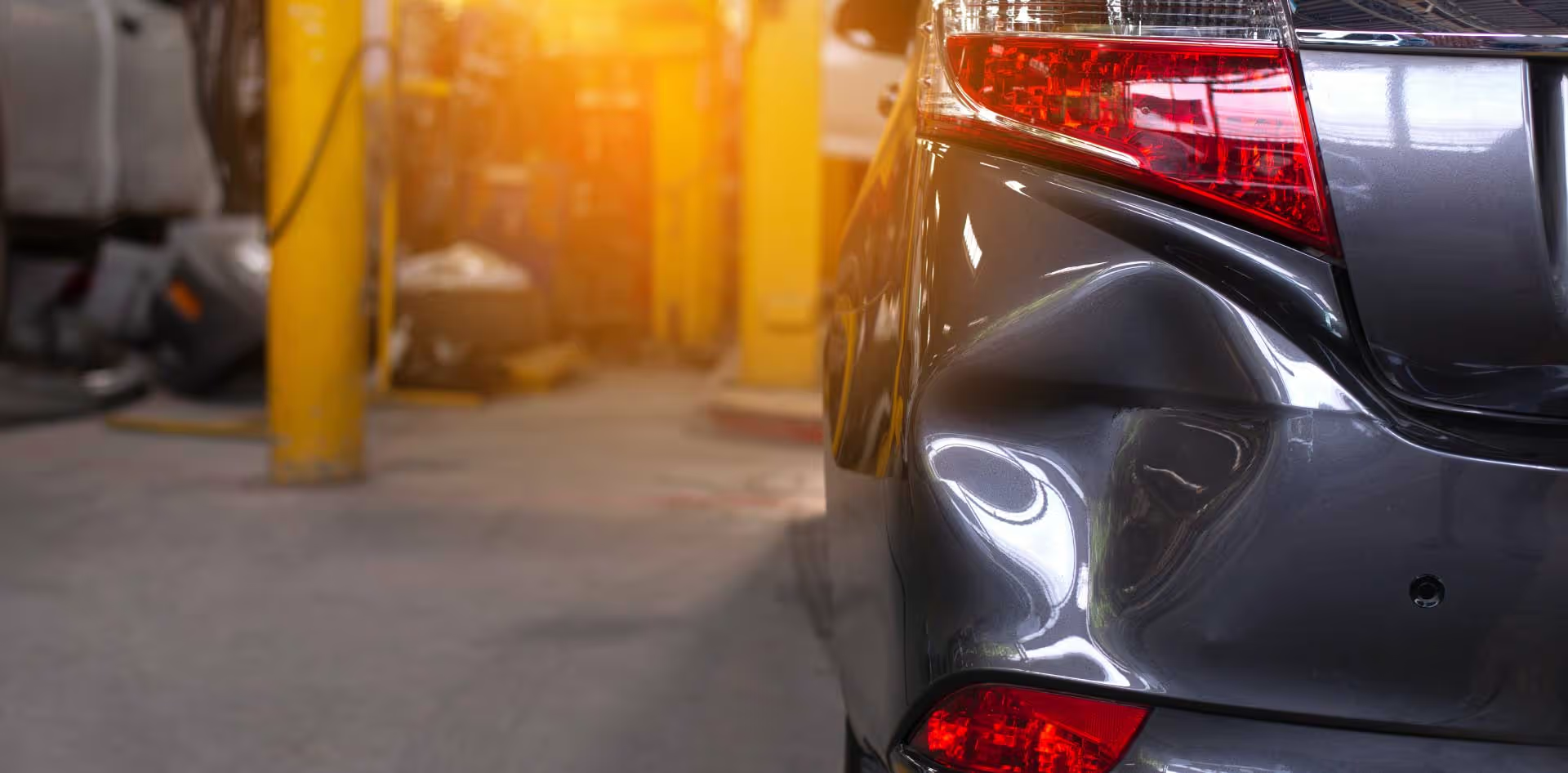
Auto technicians remove dents in two ways: PDR or traditional repair methods.
Whether an auto technician repairs a dent on a vehicle with PDR (Paintless Dent Repair) or the traditional repair method depends on the type of dent.
Paintless dent removal is the repair of a dent on a vehicle without altering the surface. This is why the final job looks new. For PDR, auto technicians use warm water and a glue-pulling system (GPS) to pull out the dents. Some use a specialized hammer to work out the dent from behind gently.
The traditional dent-removal method is always recommended for severe dent repair. Technicians will fill and sand the surface, use body filler, prime, and finally paint the dented area (it's a longer procedure).
Strengthening Panels
If the vehicle was involved in a serious collision, after assessment and diagnosis, the report will show structural damage, such as a bent frame.
To restore the vehicle's integrity to the manufacturer's specifications, technicians will need to strengthen the frame using hydraulic pulling systems, which provide accurate measurements and results. It is typically done with specialized tools; there are no unusual noises.
Sanding and priming are key steps in preparing a vehicle surface for paint. Technicians sand the surface before and after primer.
The primer coat is applied on the car surface to ensure an adhesive, uniform base for the topcoat.
After priming, they sand the vehicle's surface to remove imperfections and contaminants that could ruin the final paint finishes. They use 40–180-grit wet sandpaper or a block (depending on the car's surface) to smooth the vehicle's surface.
For most technicians, the painting and color-matching phase is both complex and intriguing.
Complex if they're under-equipped and the painting process follows the traditional model. The task requires the technician to put in considerable effort to mix the paint and achieve the desired results. Traditional painting takes more effort, time, and resources.
Painting and color matching become intriguing if the auto facility is equipped with advanced computerized color-matching machines. Equipment that makes car paint mixing and painting seamless.
Reassembling parts is common with collision damage. To assess and diagnose internal damage, technicians disassemble the vehicle, then reassemble it after repair.
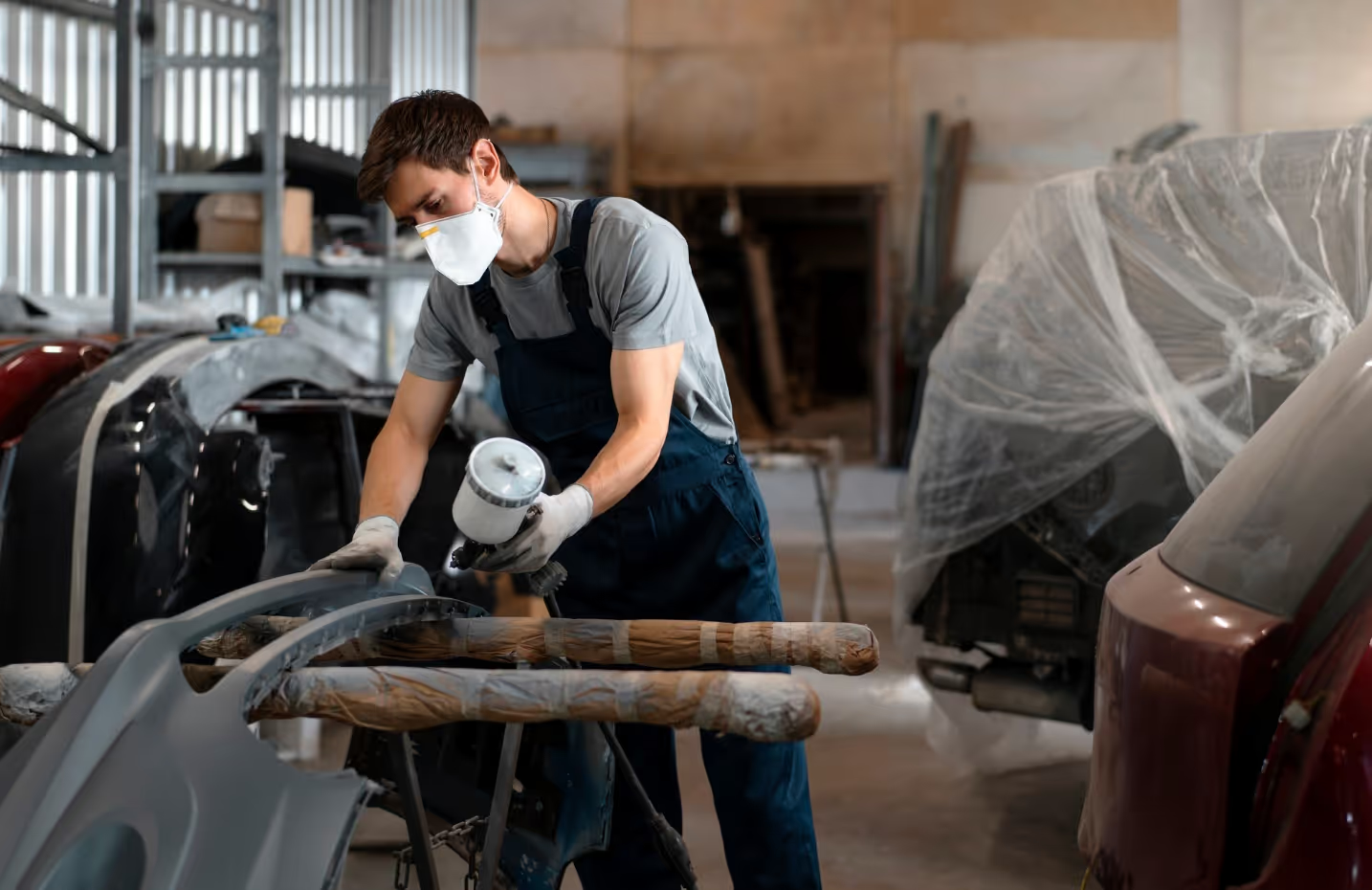
After reassembling parts, the next job for auto technicians is painting. From primer and sanding to the finish coat and touches.
Quality checks and safety are also referred to as "post-repair scanning and inspection."
Quality technicians don't assume they've done a perfect job. They take additional steps to ensure the repair's authenticity. Demonstrating service credibility and reliability.
Throughout the repair process, technicians update vehicle owners about the repair's progress. We alleviate customers' anxiety and guarantee their peace of mind.
Auto repair workspaces, regardless of how sophisticated they are, often look messy due to the oil drops, little car part particles, and used repair product containers littering the whole place - what do you expect from a mechanic space anyway (humor intended)?
After completing the day's job, technicians tidy up the repair area. Technicians ensure that repair tools are returned to their designated locations, such as boxes, shelves, drawers, or accessible bags.
Technicians at standard auto repair facilities are committed to lifelong learning and skill development to stay up to date with repair trends and knowledge and to deliver quality repair services.
A day in the life of an auto technician is full of adventures, learning, and application. Understanding auto technicians' daily routines gives you insight into what it feels like and what happens to the most damaged vehicles from start to finish at a collision repair shop.
Auto damage assessment, diagnostics, frame strengthening and alignment, painting, dent repair, system calibration, and traditional and advanced equipment usage.
Typical repairs can take up to 2 weeks, depending on the severity of the damage. Minor typical repairs take less than 24 hours.
No. In this regard, auto technicians only communicate the repair estimate to the owner or insurer after a thorough damage assessment and diagnosis. Insurance companies handle claims.
Safety precautions followed in auto repair shops include disconnecting electrical components before any welding, using gloves and safety glasses, using a car jack, safely storing hazardous materials, and using a well-ventilated, clean workspace.
High-end technicians use computerized color-matching machines to achieve perfect paint matching. Technicians who haven't adopted the advanced paint color-matching approach identify the factory color code and adjust the color to match the existing color before application.
Save even more at Regal Repair for all your collision repair needs. Take advantage of our special collision repair coupons and deals to get your vehicle back in shape without overspending. Whether it's a minor dent or major damage, our offers provide affordable, high-quality repair solutions. Don't miss out on these limited-time discounts — explore our deals today and ensure your car receives the best care at the best price! Please mention the website coupon at the time of the vehicle estimate.


.webp)
.png)
.webp)
.avif)
.webp)