Just because a car looks beautiful on the outside doesn’t mean it’s structurally, mechanically, and technically safe to drive. The job is incomplete until after a post-repair inspection. Getting your car repaired without an inspection after repair is like a surgeon closing an incision without final sweeping.It is often overlooked, but it’s a challenge that can affect performance, safety, and vehicle value.
In this article, we break down what a post-repair inspection means and how to know if you’re getting the right inspection for your vehicle after a repair.
What Is a Post-Repair Inspection?
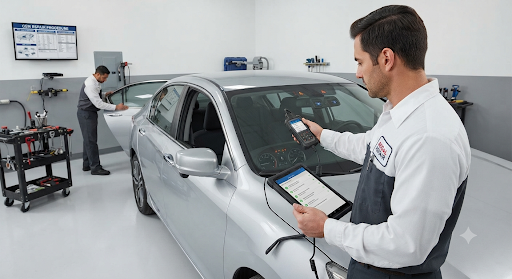
A post-repair inspection is the final quality and safety assessment, verification, and test after a collision repair.
This helps verify the accuracy, reliability, and standard of the work performed, avoiding blind spots and ensuring occupant safety.
A comprehensive post-repair inspection crucially confirms the following:
Repair meets OEM (manufacturer) standards.Usually, technicians confirm that structural repairs, replacement parts, fasteners, welds, adhesives, and panel alignment follow standard manufacturers' procedures. Not just guesswork or assumption that the job is perfect. That becomes a belief after verifying with the industry-standard repair procedures (SOP).
No hidden damage or repair issues remain.Post-inspection, also check for overlooked problems. Technicians ask and answer one vital question: “Is there anything left unfixed?” One way to find out is to check. Check for improper panel gaps, loose components, fluid leaks, suspension or steering issues, and incomplete repairs, as a quick look won’t reveal everything.
Mechanical and electronic systems are fully operational.Modern vehicles rely on electronic control modules, cameras, radar sensors, and advanced driver assistance systems (ADAS). These features are not a quick fix. They require sensor calibration to work effectively. So, technicians confirm whether they’re properly calibrated.
What Is Included in a Vehicle Safety Check?
A vehicle safety check verifies that both the mechanical and safety systems have completed repairs. Modern vehicles are housing dozens of sensors, onboard computers, and advanced driver assistance systems (ADAS), so today’s inspection goes far beyond a simple visual walkthrough. Technicians thoroughly evaluate the following:
Structural Alignment Checks:The vehicle’s frame and body structure are measured to verify compliance with manufacturer specifications.Even if the outside looks fine. On the inside, there could be hidden structural damage. They can compromise the overall safety of the vehicle if the weak structural components are only straightened when they’re meant for replacement.
Paint and body panel fitment.One of the key indicators of a complete repair is alignment and fitment. So, after the repair, technicians inspect the panel gaps, doors, hoods, and trunks for any misfits, inconsistencies, or mismatched paint finishes.
Suspension and steering checkWhen steering still feels bad after a repair, or the suspension still makes unusual sounds, something is dangerously off. So, technicians check shocks, control arms, tie rods, and steering systems for wear that can affect vehicle stability and steering response.
Brake system evaluationThe brake system is a core component of a vehicle’s functionality, and many issues can go unnoticed without a post-inspection. The brake pads, calipers, and hydraulic components need to be evaluated to ensure they’ll work effectively in emergencies.
ADAS sensor and calibration verificationIt’s not enough to calibrate the advanced driver assistance system (ADAS) after most modern vehicle repairs; trained technicians now verify that the safety systems are properly calibrated and functioning normally under emergency conditions.
Tire alignment and wear inspection:Tire alignment and wear inspection help technicians spot tread depth, wear patterns, inflation, and wheel alignment issues and fix them promptly to avoid affecting handling and tire lifespan.
Diagnostic scanning for error codes:The dashboard warning helps drivers identify errors or problems and tackle them quickly. So, computerized scanning identifies active and pending diagnostic trouble codes (DTCs) that may not trigger warning signs in emergencies.
These inspections are all significant post-repair to guarantee drivers’ safety on the road. So, none should be skipped.
Why Post-Repair Inspections Matter More Than Ever
Really? Should you even care about a post-repair inspection? How actually critical is it?
This section breaks down why post-repair inspections have become a critical part of every quality repair.
Today’s vehicles rely on dozens of interconnected safety systems.Most modern vehicles contain advanced driver assistance systems (ADAS) that include blind-spot monitoring, lane-keeping assist, emergency braking, and adaptive cruise control. They’re interconnected safety systems that need millimeter-level precision to function properly together.
Small Alignment Error Can Compromise ADAS Performance:A slight shift in wheel alignment, suspension geometry, bumper position, or windscreen installation can cause sensors to misalign. According to AAA, even a tiny sensor misalignment can cause the system to detect objects incorrectly more than 100 feet ahead and can hinder automatic braking or lane-centering performance.
Hidden structural damage isn’t always visible:This is the challenge that causes most car owners to put both their safety and finances at risk when a half-baked repair facility performs repairs without post-repair inspection. Most major collision damage isn’t cosmetic; it's internal structural damage (frame rails, mounting points, etc.), which is why post-repair inspections are critical.
Electronic problems don’t always trigger immediate warning lights:According to notes from the U.S. Federal Trade Commission, consumers often have “no standardized indicator” that a safety sensor is out of calibration. So, you really can’t tell when ADAS sensors aren’t properly aligned just from the dashboard warning light. Hence, post-repair inspections are essential.
Repair can unintentionally affect other vehicle systems:For instance, if you repair or replace a bumper, you need to recalibrate the safety systems it is housing.Otherwise, it will disrupt them. The same goes for a windshield, suspension component, or steering part that often requires recalibration of cameras, radar sensors, steering angle sensors, and other electronic modules.
A repair isn’t finished after the paint dries or the parts are replaced; it finishes after post-repair inspections, scanning, and verification.
What Can Go Wrong If You Skip a Post-Repair Inspection
Here are things that could go wrong without a post-repair inspection:
Misaligned safety sensorsThere could be a millimeter-level misalignment—enough to compromise safety systems (radar sensors, cameras, and ultrasonic sensors) that can affect blind-spot monitoring, automatic emergency braking, and lane-keeping assist, rendering them ineffective individually or collectively.
Improperly Calibrated ADAS Systems.ADAS calibration is not enough outside of post-calibration inspection. So, after repairing a vehicle's bumpers, windshields, and mirrors, skipping or incorrectly performing calibration can cause drivers to receive inaccurate warnings or none at all. And that can be highly risky.
Steering and Wheel Alignment ProblemsEven minor collisions can affect the steering and wheel alignment. So, trained technicians should ensure a post-repair inspection that identifies the following:
Steering wheel pulling to one side
Uneven tire wear
Incorrect wheel alignment
Reduced handling stability.If these components are ignored, vehicle control can be compromised over time.
Hidden Structural DamageNot all frame or structural damage is visible.Even minor damage can weaken crash protection and affect how vehicles absorb impact in future collisions. Post-repair, ensure that hidden frame and structural damage are identified and corrected through post-repair scanning.
Brake or Suspension ProblemsCollision repair often involves suspension, steering, and brake components. In such cases, post-repair inspection helps ensure brake performance, eliminate suspension noise, resolve uneven braking, improve vehicle stability, and protect tires and other components from excessive wear.
Airbag System ReadinessAfter an airbag deployment, it must be completely replaced. And if the supplemental restraint system (SRS) is not free of fault, the airbag won’t deploy in a future collision. Post-collision inspection helps detect hidden electrical faults that would otherwise be undetectable.
Long-Term Wear and Safety Risks.Some repair problems don’t appear immediately. They develop gradually over time.
Tire wear is caused by poor alignment.
The suspension component gradually weakens* over time.
The steering shift
The sensor error under certain weather conditions
The gradual but steady vibration and handling issues.Post-collision inspection often detects these repair-related problems.
How Modern Safety Systems Depend on Accuracy
Modern vehicles rely heavily on Advanced Driver Assistance Systems (ADAS) to reduce collision rates and assist drivers in safe driving. So, here's exactly how modern vehicle safety systems depend on accuracy.
Lane Departure Warning (LDW) and Adaptive Cruise Control (ACC) depend on accurate radar and sensor alignment to factory specifications to perform properly. The vehicle may drift out of its lane or maintain an incorrect following distance if the sensors or cameras are off.
Radar sensors continuously measure the distance, speed, and direction of surrounding vehicles in reality.
Incorrect radar calibration can cause delayed or unnecessary braking, and even brake failure down the road if the system can’t detect hazards.
Forward-facing cameras analyze lane markings, traffic signs, pedestrians, and other road users. If these cameras are misaligned, they may misread road markings or fail to correctly identify hazards.
Incorrect sensor data can trigger false alerts or system failure.
Drivers may experience several emergency brake activations, inaccurate lane-keep corrections, missed collision warnings, or warning lights indicating ADAS faults. In other cases, the system continues to operate incorrectly without triggering any fault alert or warning. Ultimately, it takes accurate repair and post-repair inspection to ensure ADAS correct performance.
Why Shops That Include Post-Repair Inspections Are More Reliable
Even after fixing a damaged part, a collision repair is not complete until the problem has been verified as solved. Here’s why shops that include post-repair inspections are more reliable.
Step-by-step quality control:Every repaired area is checked against standard factory and industrial procedures and quality checklists. The panel alignment, paint finish, faster torque, structural measurements, and component installation are checked. Every repair must meet standard procedures to avoid human error.
Diagnostic scanning tools:There could be a hidden electronic control module fault in many modern vehicles that is invisible. Professional post-repair shop performance includes a diagnostic scan that identifies these faults and instantly addresses them before they cause fatal collisions on the road.
Manufacturer (OEM) Repair Standards:Professional auto body shops follow the correct manufacturer repair procedures according to OEM specifications to achieve the intended repair result, rather than a generic guide. Everything from painting and replacement techniques to calibration ensures the vehicle is restored to factory condition.
Final test drives and system checksAfter completing a repair, technicians need to confirm steering, braking, suspension performance, vehicle tracking, and overall drivability through controlled road testing. This helps technicians assess their work in real time.
ADAS recalibration verification: Cameras, radar sensors, and other advanced driver assistance systems usually require recalibration after a collision repair. Professional shops ensure that all required calibrations are completed in accordance with OEM procedures before customers drive out of their facilities.
Attention to hidden damage:Collision impact continues to affect structural components in most cases. Only proper shops care to check for hidden damage after a repair. Conduct thorough post-repair inspections to uncover hidden damage and address it before it becomes a safety or reliability issue.
How Long Does a Post-Repair Inspection Take?
A post-repair inspection can take 15 minutes to several hours, depending on the type of repair and the vehicle's built-in technology. While a quick cosmetic repair may only require a visual inspection and a short road test, structural repairs and vehicles equipped with Advanced Driver Assistance Systems (ADAS) require a much more thorough evaluation. (LearnADAS)
A technician may complete the inspection for minor repairs—such as small paintless dent repairs or cosmetic panel work— in 15–30 minutes by checking panel alignment, paint quality, fasteners, and overall finish.
For collision repairs or modern vehicles with cameras, radar, and sensors, inspections take longer because technicians must perform the following:
Post-repair diagnostic scans
Verification that all Diagnostic Trouble Codes (DTCs) have been cleared
Road testing (when required)
ADAS calibration verification
How Long Does a Post-Repair Inspection Take?
Depending on the type and severity of damage, a basic post-collision inspection can take 30–60 minutes. A comprehensive safety system (Advanced Driver Assistance System) diagnostic scan can take 1–3 hours or longer.
When Should You Request a Second Inspection?
It might seem weird, but you can also request a second inspection if you’re unsure about the quality and safety of the repair—especially in cases of critical damage. Here are some of these instances:
After a Major CollisionCollisions that involve airbag deployment, the affected vehicle's frame, severe suspension damage, and electronic safety systems. The vehicle may look fully repaired, but a second inspection, likely by an independent inspector, ensures the repair meets OEM specifications and that no hidden damage remains.
When ADAS systems were involvedA second inspection is essential when advanced driver assistance systems such as lane-keeping assist, blind-spot monitoring, and automatic emergency braking are involved. You need to confirm whether the vehicle has been properly recalibrated because they’re highly delicate.
If a warning light appears after the repairThe dashboard warning light may appear after repair. Also, it could be the airbag light, engine light, ABS warning, or ADAS warning; if it appears shortly after you collect your vehicle, it should never be ignored.The light may indicate improper calibration or an unsolved fault. A second inspection is needed in such situations to resolve the issue.
If the Steering Feels OffA vehicle that pulls to one side, has an off-center steering wheel, vibrates unusually, etc. A second inspection will help identify the issue early before it becomes a safety risk.
After Insurance-Directed Repairs When You’re UnsureMost auto insurance companies have a repair network (DRP) they partner with. And occasionally these repair networks offer low-quality repairs. So, if you’re unsure whether the repair on your vehicle meets OEM specifications, consider a second look (inspection).
Trust Your InstinctsIf you have a feeling something is wrong after a vehicle repair, request another inspection. A post-collision inspection costs less than the potential consequences of undetected safety issues.
Conclusion
Skipping a post-collision inspection or repair, especially after a critical repair, can leave hidden safety issues undetected.
A proper inspection ensures that everything, from cosmetics to structural integrity checks and advanced driver-assistance systems (ADAS), is functioning as intended.
This is why it’s important to choose a repair facility that prioritizes thorough inspection, like Regal Repair.
FAQ
What is a post-repair inspection?
A post-repair inspection verifies the quality of the repair after completion, ensuring a satisfactory outcome.
Why is a vehicle safety check important after repairs?
Because if you don’t check the vehicle after repair, you may miss issues that require immediate attention.
What problems can be missed after collision repairs?
The following problems can be missed: Advanced Driver Assist Systems (ADAS) calibration, brake repair, frame and structural repair, suspension repair, etc.
Do all body shops perform post-repair inspections?
No. Not all body shops are professionally equipped. Under-equipped body shops often skip post-repair inspection.
When should I get a second inspection after repairs?
Immediately after repairs, ask the shop for a second inspection if they can do it to your satisfaction.
Save even more at Regal Repair for all your collision repair needs. Take advantage of our special collision repair coupons and deals to get your vehicle back in shape without overspending. Whether it's a minor dent or major damage, our offers provide affordable, high-quality repair solutions. Don't miss out on these limited-time discounts — explore our deals today and ensure your car receives the best care at the best price! Please mention the website coupon at the time of the vehicle estimate.
Repair Your Vehicle At Regal And Get:
$500
Repair Your Vehicle At Regal And Get:
Min. $2,000 repair job. Coupon may not used toward any other special services.
Before Returning Your Leased Car To The Dealer, Get:
FREE
Lease Return Repair Inspection
Can be combined
Make It Easy With A:
FREE
Car Loaner or Rental
Up to $40 or rental car cost, with min. repair cost of $2000.
Not valid with other services or promotions. For contact info only. Additional exclusions may apply. Offers not for merchant purposes at time of estimate. Must have printouts.
Expires on 12/31/2026
Our Locations
Three Collision Centers, One Standard of Quality
Choose the Regal Repair shop closest to you. Walk in for a free estimate, call ahead or get turn-by-turn directions in one tap.
Primary location
North Hollywood
Serving the San Fernando Valley, Burbank, Glendale & Hollywood






.webp)
.png)
.webp)
.avif)
.svg)