

.svg)


Primary location
North Hollywood, LA
-
5430 Cahuenga Blvd,
North Hollywood, Los Angeles, CA 91601 - (818) 505-1442
Not many drivers, including those in Los Angeles, like to admit the fear, stress, and confusion that come with decision-making after an accident. But it's there — especially when trying to answer this question: should you file an insurance claim or pay out of pocket?
The right choice depends on repair costs, your deductible, fault, potential premium increases, and the extent of hidden damage. Approximately 7 out of 10 collisions don't require an insurance claim.
This blog breaks down exactly when you should file a claim — without paying double and protecting your premiums — and when you shouldn't.
Regardless of the severity of the collision, here are the first things you should do:
Check for injuries and safety first.This is the top priority. If you or any passengers are injured, unconscious, or behaving unusually after the accident, call emergency services immediately. If nobody is harmed, no need for alarm — but move the vehicle to a safe spot if possible.
Exchange insurance and contact information with all parties involved:
Take photos of all damage.A picture is worth a thousand words. Capture:
Get a professional estimate.Before deciding whether to pay out of pocket or file a claim, get a professional estimate to understand what works best for you. This matters not because you can't see the physical extent of the damage, but because you might not see structural or ADAS-related damage — and a hasty decision can cost you hundreds of dollars.
In many repair situations, filing a claim doesn't lead to the lowest long-term cost. Due to deductibles, potential premium increases, and the impact on your claim history, small or isolated damage is often cheaper to handle directly. Paying out of pocket usually makes more financial sense when:
Repair costs are lower than or close to your deductible.For example, if the total repair cost is $1,000 and your deductible is $800, filing a claim means insurance pays only $200 — while a claim on your record can raise your premium in the long run. Most deductibles range from $500 to $1,000 in the U.S.; repairs at or slightly above that amount often don't justify filing.
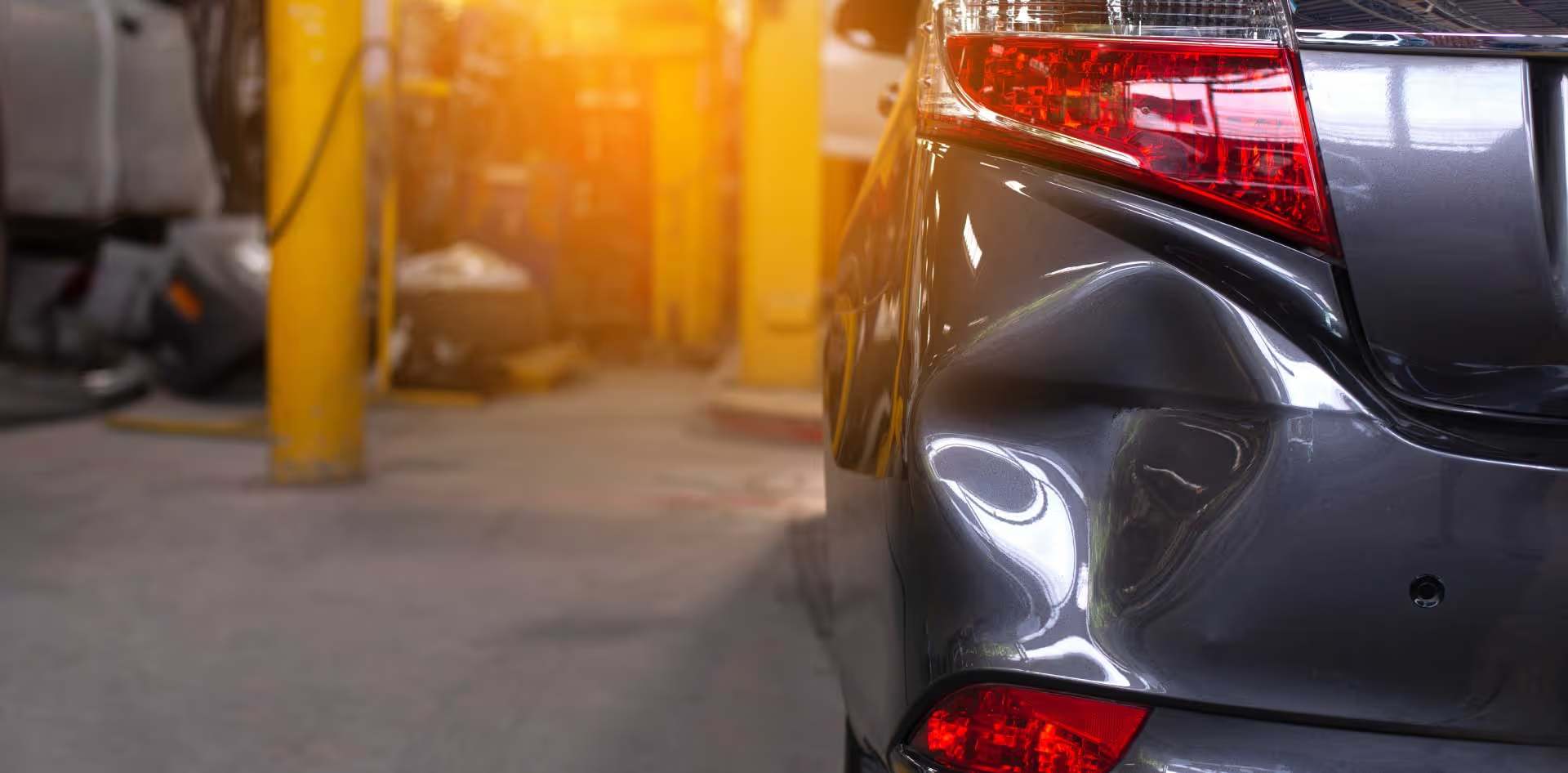
The damage is minor and cosmetic.Minor dents, scuffs, dings, and other surface defects typically cost under $250 to repair.
A single panel has scratches or dents.If the damage affects one panel (like a door or fender), the repair cost usually doesn't call for a claim.
You want to avoid a premium increase.The exact increase depends on your insurer, but according to the Insurance Information Institute (III), an at-fault claim can raise premiums by 20%–40% or more.
No other vehicles or property are involved.If there's no third-party vehicle, no property damage, and no liability risk, there's zero exposure to legal or claims complexity — making out-of-pocket repair the more efficient choice.
Some situations call for filing a claim instead of paying out of pocket. It's always safer in these cases:
Major collision damage.Structural, ADAS-related, or frame damage isn't cosmetic — it can quickly exceed thousands of dollars, making a claim the financially safer option.
Injuries are involved.Medical bills add up fast. The average bodily injury liability claim in 2023 was $26,501. Paying out of pocket here can be extremely risky — file a claim the moment any injury is noticed, on either side.
Multiple vehicles are affected.Accidents involving multiple vehicles carry greater liability. Insurance companies provide investigation, documentation, and protection that a private agreement can't match.
The vehicle is expensive or newer.It's better to file a claim than to pay heavily out of pocket, especially if hidden damage surfaces later.
Possible frame or suspension damage.Suspension repair alone can range from $1,000 to $5,000 or more when damage is severe — a strong signal to file.
Airbag deployment.When an airbag deploys, it's not just about repair — it's replacement of crash sensors, seatbelt pretensioners, control modules, and safety system calibrations. These repairs cost thousands and can push a vehicle toward total loss.
Fault is unclear.Filing a claim creates an official record and investigation, helping you avoid disputes and legal exposure.
Not every collision should be handled without insurance — doing so can mean bigger financial risk down the road.
What's a deductible?It's the agreed-upon amount you pay out of pocket before your insurer covers the rest of a claim.
For example: if the repair cost is $2,500 and your deductible is $500, your insurer pays $2,000 and you pay $500. If the repair cost is below your deductible, the insurer pays nothing — you cover the full bill yourself.
Common auto insurance deductible amounts in the U.S.:
According to industry data, $500 is the most popular deductible, while many drivers choose $1,000 to lower their premiums.
When repairs are barely above the deductible:If your deductible is $500 and the repair costs $700, you pay $500 and the insurer pays $200.
Why some drivers choose to pay privately:
Before authorizing a claim, compare your repair cost to your deductible. When the difference is small, paying out of pocket is usually the better option.
You don't need to worry blindly — just know the key factors: fault, claim history, claim size, and your insurer's underwriting rules.
Fault vs. non-fault accidents.Who caused the accident is the biggest factor. At-fault accidents can raise premiums by 20%–50% or more, since insurers view them as an indicator of future risk. Not-at-fault accidents generally have little to no impact.
Previous claim history matters.Drivers with multiple claims in the past 3–5 years, prior at-fault accidents, or traffic violations are typically viewed as higher risk and may face larger increases.
Insurance company policies vary.Some insurers offer accident forgiveness programs, claim-free discounts, and different surcharge thresholds. Often there's no direct surcharge, but you may lose a claim-free or safe-driver discount.
Severity of damage matters.Minor repairs (dents, scratches, dings) cost less and have less impact. Major repairs or total-loss claims are more likely to raise premiums.
California-specific considerations.California offers stronger consumer protections — insurers can't raise your premium solely because of a not-at-fault accident or claim. However, loss of certain discounts or general rate changes can still affect renewal pricing.
Paying out of pocket can seem like the easiest choice, but it carries real financial risk:
Unexpected repair supplements.Initial estimates typically only cover visible cosmetic damage. A supplemental estimate — 20%–40% more expensive — is common once repairs begin, and without a claim, that cost comes straight out of your pocket.
Disputes with other drivers.Private settlements can get complicated fast. If the other driver files a claim, you may end up paying additional compensation, even if you weren't at fault.
No documentation trail.Insurance claims create an official record that can matter in legal proceedings.
Liability concerns.Paying out of pocket for cosmetic damage without checking for structural issues can lead to future damage and legal exposure.
Delayed injuries.Not all injuries show up right away — some develop over weeks. A private settlement can turn into a medical claim or legal action if the other party develops back pain, whiplash, or other issues later.
Costs can escalate quickly.A minor bill can snowball into supplemental estimates, rental cars, towing, storage fees, medical expenses, and legal action.
Don't pay out of pocket without being fully sure — contact Regal Repair if you're in doubt.
Before approving any repair, gather accurate information. A trusted collision repair shop can help you understand the full scope of damage, repair costs, and insurance implications before work begins.
Trust matters: 73% of drivers believe they've been overcharged for auto repairs at some point — underscoring the importance of a clear estimate and professional evaluation before committing to repairs.
How much is my deductible? Typically between $250 and $1,000, as stated in your policy: knowing this helps you decide whether filing makes financial sense.
Is there hidden damage? If so, file a claim, a supplemental estimate is likely after teardown.
Will the repair affect the vehicle's safety systems? If ADAS features are involved, it's usually wise to file, since supplemental costs are common.
Am I at fault? If the other driver is at fault, they're responsible for repair costs. If you're at fault, filing a claim helps settle things officially and avoid disputes — even with a likely premium increase.
Could the repair cost increase after teardown? Yes, if hidden damage is found, costs can rise by 20%–40% or more.
Is another driver involved? Exchange contact and vehicle details, and gather as much evidence as possible to reduce disputes later.
Can I safely delay repairs? Not recommended. Regardless of severity, it's safer and more cost-effective to address vehicle damage early.
Whether to file a claim or pay out of pocket after an accident should be an informed decision — based on repair costs, hidden damage, your deductible, and long-term financial impact.
Get a professional inspection before deciding anything. You can also get a free estimate from Regal Repair and speak with a professional. Contact us here.
Should I file an insurance claim for a minor accident? No. If the damage is confirmed to be minor and cosmetic, paying out of pocket is typically the better financial choice.
Can hidden damage increase repair costs later? Yes. Hidden damage found during a full teardown and inspection often results in supplemental cost estimates.
Will my insurance go up if I file a claim? Usually not, if you're the not-at-fault party and don't file frequently.
Is it cheaper to pay out of pocket for small repairs? Yes, it's typically much cheaper than filing a claim.
When should I file a collision claim that Los Angeles drivers commonly overlook? When another driver is involved.
Save even more at Regal Repair for all your collision repair needs. Take advantage of our special collision repair coupons and deals to get your vehicle back in shape without overspending. Whether it's a minor dent or major damage, our offers provide affordable, high-quality repair solutions. Don't miss out on these limited-time discounts — explore our deals today and ensure your car receives the best care at the best price! Please mention the website coupon at the time of the vehicle estimate.


.webp)
.png)
.webp)
.avif)
.webp)