Picture the scenario: You're a Los Angeles driver who just picked up your freshly painted car from the body shop. It looks spotless, flawless, and pricier.
Now, here's the question: What is the most important thing you should know after this fresh paint job?
The answer is simple. Your paint is now vulnerable. Any weather conditions, including intense Los Angeles heat, UV exposure, dust, and moisture, can quickly harm your car's paint finish.
Understanding how weather conditions can damage car paint helps you protect your investment and keep it looking fresh year-round.
In this guide, we'll walk you through the major details, including practical steps for protecting your fresh car paint from weather-related damage and maintaining its appearance and value. Let's dive in.
Why Fresh Auto Body Paint Needs Time to Cure
A freshly painted car may look dry when you pick it up from the shop. But the reality is that "Dry" doesn't mean fully cured.
"Dry" means the solvent is evaporating and the paint is not yet fully dried. You touch it, and it feels dry. It doesn't mean it's cured.
Curing continues after you leave the body shop. A modern heated paint booth can accelerate drying, but the paint continues to cure for 30-60 days (and sometimes up to 90 days, depending on the paint system and environmental conditions). During curing, the clear coat forms stronger chemical bonds and reaches its maximum hardness.
Fresh paint is more sensitive during the first few weeks. Until curing finishes, it remains susceptible to damage from harsh chemicals, bed droppings, swirl marks, and scratches. For this reason, certified auto repair facilities recommend extra care during the first month after repainting—like keeping the vehicle in cooler temperatures and avoiding washing for the first 30 to 90 days.
Proper curing determines long-term quality. Naturally allowing the paint to cure helps preserve its gloss, quality, resistance, and longevity. Washing before it cures compromises its overall integrity.
How Los Angeles Heat and UV Exposure Affect Fresh Paint
Southern California climate can be tough for newly painted vehicles. The intense sunlight, high UV levels, and high surface temperatures can affect how freshly painted vehicles cure and how well they retain their quality.
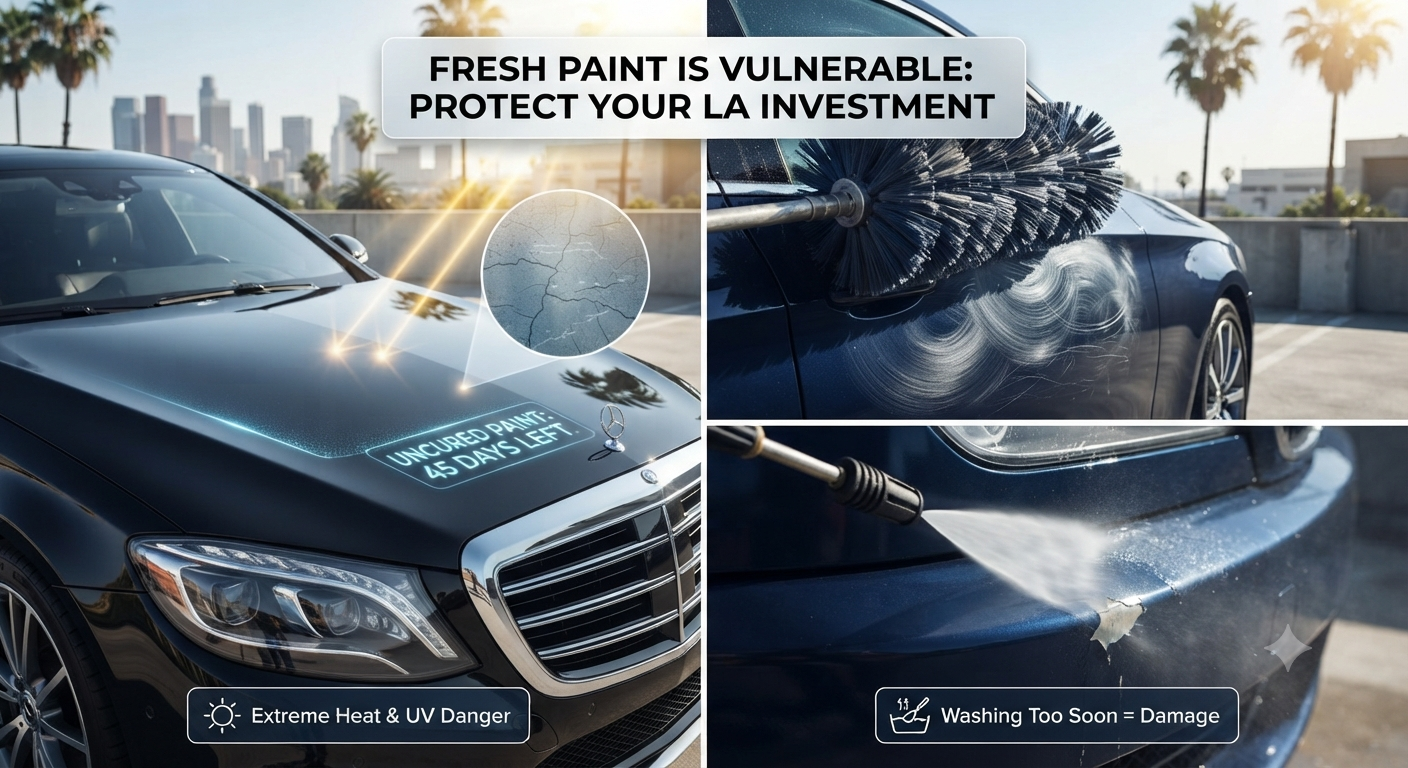
Strong UV exposure accelerates UV degradation; Ultraviolet radiation breaks down paint components, such as pigments and clear coats, over time. Often leads to fading, oxidation, and loss of gloss if the finish is exposed before it has fully cured. Modern clear coats have UV inhibitors to protect against sun damage, but fresh paint still needs proper curing before exposure to direct sunlight.
A parked vehicle can become significantly hotter than the surrounding air. Even on warm Southern California days, vehicle surface temperatures commonly exceed 140°F (60°C) in direct sunlight because the vehicle is parked, even when the surrounding temperature is lower.
Extreme Heat Can Cause Uneven Curing. Fresh automotive paint cures through controlled chemical reactions. Excessive heat may cause the paint to dry faster but also increase the risk of uneven gloss, trapped solvents, and a low-quality result.
Dark colored vehicles require additional care. Black, dark blue, and other dark-colored vehicles absorb more heat than lighter-colored ones, resulting in higher, faster metal temperatures. The additional heat often places greater thermal stress on fresh paint. But you don't have to worry if you park in a shaded environment or a covered car park and avoid prolonged exposure to sunlight.
Why Washing Your Car Too Soon Can Be a Problem
Most car owners wonder why it's important they don't wash their cars too soon after a fresh paint job. However, it's not casual advice or instruction. Because washing too soon can reduce quality and durability, here are some examples:
An automatic car wash can damage uncured paint. Rotating brush and cloth strips during an automatic car wash on freshly painted vehicles can cause swirl marks, scratches, and other damage when the paint hasn't fully cured. Give it at least 30 days before you use an automatic wash.
High-pressure water can affect repaired edges and finishes. Most car wash spots use high-pressure water to wash cars. The powerful force can lift paint edges or interfere with newly repaired areas before the paint has fully hardened.
Harsh cleaning chemicals can interfere with curing. Strong detergents, wax, and polishes can destroy paint during curing or trap solvents, affecting long-term durability. Most manufacturers and repair professionals often advise delaying waxing for about 30 days after repainting.
Hand washing is the safest option. Hand washing is the best option if the vehicle must be cleaned. Use a pH-neutral car shampoo, a microfiber wash mitt, and low-pressure water. Gentle hand washing is recommended after 72 hours to 2 weeks of receiving a fresh paint job, depending on the repair shop's instructions.
Follow your repair shop's timeline. The drying and curing timeline depends on the paint system, temperature, humidity, and repair method. As a general guideline:
Avoid washing in the first 72 hours if possible.
After 2 Weeks, you can gently hand wash only if necessary.
After about 30 days, automatic car wash, waxing, and polishing can be considered safe if your repair shop doesn't recommend a longer waiting period.
When Is It Safe to Wax or Ceramic Coat Fresh Paint?
A freshly painted car may look dry, but the paint film is still hardening while releasing residual solvents through a process known as "off-gassing." So it's still typically curing.
Applying wax, paint sealants, or ceramic coatings too early can affect the curing process. Let's break it down:
Wax and sealants are particularly effective because they create a protective barrier over the paint.
If applied before the paint is fully cured, they can interfere with the process, trapping the remaining solvents in the paint. This leads to gloss loss, hazing, and other Paint defects.
The exact waiting period before applying wax and sealant depends on factors such as paint systems, application method, bake circle, and environmental conditions.
Note: Ceramic coatings require even greater caution because applying them before paint has fully cured can compromise adhesion.
Why Paint Quality and Repair Techniques Matter
The quality of a paint job depends as much on the refinishing process as on the structural repair itself. Poor paint preparation or curing can lead to fading, peeling, blistering, corrosion, and obvious paint mismatch, reducing the vehicle's value and requiring costly reworks. This section clearly explains these factors:
Proper Paint Conditions. A professional paint booth controls airflow, temperature, humidity, and filtration. These conditions help the paint cure properly while minimizing contamination from dust and airborne particles and resulting in a smoother, longer-lasting finish. OEM-paint matching system. OEM has a standardized paint repair procedure that adheres to manufacturer specifications to achieve a seamless paint blend and finish.
High-quality clear coat application. A professional collision facility uses a high-quality clear coat to resist ultraviolet (UV) radiation, moisture, road chemicals, and minor abrasion, restoring factory gloss. A premium clear coat and application significantly enhance paint's long-term durability.
Dust control during refinishing. Even microscopic particles can damage paint during the refinishing process. This is why certified repair facilities, such as Regal Repair, use only clean, conducive refinishing environments to achieve smoother surfaces and better adhesion. Nothing less.
Why Professional Aftercare Advice Matters
Professional auto repair facilities provide car owners with the appropriate aftercare instructions based on how your vehicle was repaired, the paint system used, and the conditions it will face after leaving the shop.
While following the right advice can restore paint appearance, maintain durability, and even preserve warranty coverage, generic advice does the opposite.
Professional aftercare recommendations typically vary based on:
Vehicle color differences. The effect of damage on dark-colored vehicles differs from that on lighter-colored vehicles. Dark colors like black or navy blue show swirl marks, scratches, and heat-related paint defects more easily than lighter-colored vehicles. Therefore, they require extra care during the curing period. For example, you should avoid parking a darker-colored vehicle directly in sunlight while it's still curing.
Repair Size and Location. There are different curing-time instructions and maintenance requirements for repainted panels, bumper repairs, or spot repairs. So, get the right instructions from your OEM-certified shop.
Climate exposure: Vehicles. Severe climate conditions, such as intense light, high humidity, road salt, heavy rain, or extreme temperatures, may require additional protection, as they directly affect paint curing and long-term finish durability.
Paint Product Variations. Different manufacturers and paint systems (waterborne, solvent-based, clear coat formulations, backing cycles, etc.) have different characteristics and recommended waiting periods before washing, waxing, or applying paint protection.
Manufacturer Recommendations. Professional repair facilities follow manufacturer-approved repair procedures, including refinishing and post-repair care instructions designed to provide damage resistance, safety, and warranty compliance.
Conclusion
Weather conditions can significantly affect fresh auto body paint after repair. Los Angeles heat and UV rays are a perfect example. But it's not about the potential damage weather can cause to your vehicle; it's much more about proper aftercare to protect your vehicle's paint and value.
Follow professional care instructions to keep your fresh car paint looking even finer and lasting longer.
P.S. Contact Regal Repair for a professional paint job or aftercare instructions.
FAQ
Can hot weather damage fresh auto body paint?
Yes. Fresh auto body paint may seem dry, but it's not fully cured. Intense heat can cause the paint to cure prematurely and improperly, affecting its quality and long-term durability.
How soon can I wash my car after paint repairs?
Not sooner than 30 days. You can start proper washing after 30–90 days.
What causes car paint damage after collision repairs?
Fresh car paint repairs are vulnerable to harsh weather conditions and early washing. These are some of the major causes of damage after collision repairs.
How can I protect the paint on a new car after repair?
To protect your new car's paint after a repair, keep it out of direct sunlight and harsh weather. Avoid early washing; start washing only after 90 days.
Is it normal for fresh paint to look slightly different at first?
Yes. Because it's often still curing. The paint solvent is still evaporating, and the paint might look slightly different.
Save even more at Regal Repair for all your collision repair needs. Take advantage of our special collision repair coupons and deals to get your vehicle back in shape without overspending. Whether it's a minor dent or major damage, our offers provide affordable, high-quality repair solutions. Don't miss out on these limited-time discounts — explore our deals today and ensure your car receives the best care at the best price! Please mention the website coupon at the time of the vehicle estimate.
Repair Your Vehicle At Regal And Get:
$500
Repair Your Vehicle At Regal And Get:
Min. $2,000 repair job. Coupon may not used toward any other special services.
Before Returning Your Leased Car To The Dealer, Get:
FREE
Lease Return Repair Inspection
Can be combined
Make It Easy With A:
FREE
Car Loaner or Rental
Up to $40 or rental car cost, with min. repair cost of $2000.
Not valid with other services or promotions. For contact info only. Additional exclusions may apply. Offers not for merchant purposes at time of estimate. Must have printouts.
Expires on 12/31/2026
Our Locations
Three Collision Centers, One Standard of Quality
Choose the Regal Repair shop closest to you. Walk in for a free estimate, call ahead or get turn-by-turn directions in one tap.
Primary location
North Hollywood
Serving the San Fernando Valley, Burbank, Glendale & Hollywood






.webp)
.png)
.webp)
.avif)
.svg)