

.svg)

Primary location
North Hollywood, LA
-
5430 Cahuenga Blvd,
North Hollywood, CA 91601 - (818) 505-1442
Yes, structural damage can be repaired following fundamental repair procedures.
Many car owners understand that a car's structure consists of the body and the internal skeleton (as in humans). The internal skeleton of a car is its structure—the pillar that supports other components.
Little wonder most car owners see safe structural damage repair as an impossible task, but it's achievable.
Structural damage can be repaired safely, and not all structural damage results in a vehicle being "totaled." How is that actually possible? If structural damage can be repaired safely, and some structural damage does not result in a vehicle being "totaled," how is that achievable?
This blog will walk you through a thorough breakdown for safer, smarter repair decision-making.
Just as a human skeleton shows signs of damage, a car's structural system does too. Most people miss this part. Operating a car with structural damage is akin to a potential explosion.
Here are the typical structural damage signs easily spotted when you pay attention:
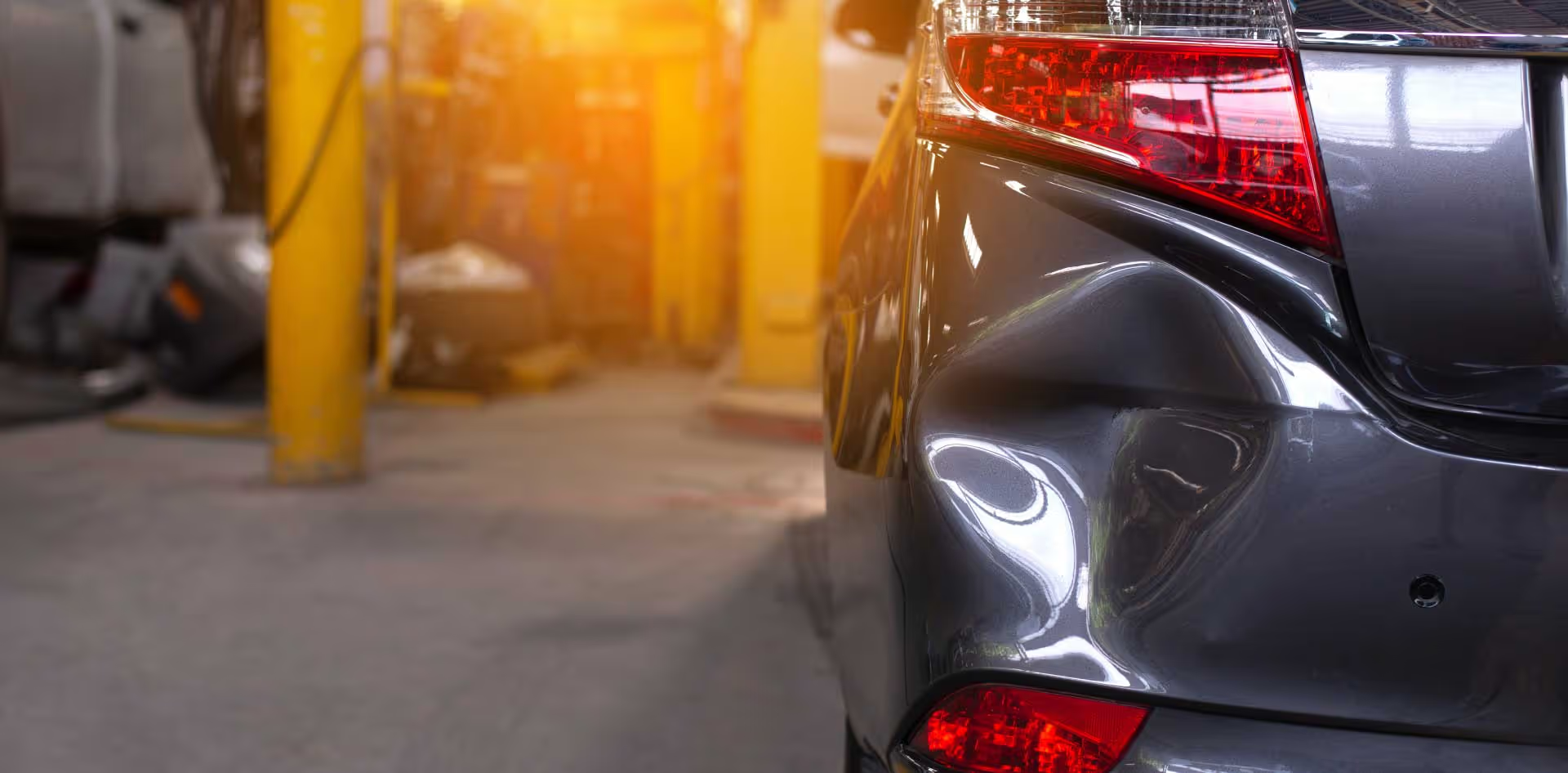
Structural damage affects the chassis, frame, or unibody of a car (its internal skeleton), and insurance companies treat it more seriously than cosmetic damage.
After an accident, you were told your vehicle has "structural damage."
The next best action is to file an insurance claim if you have one. And that's where things get intriguing.
The insurance company will assess the damage (frame, suspension, and unibody safety components) through an insurance adjuster.
Some factors will be considered after the assessment before they finally determine the fate of your vehicle. Factors include:
Finally, the actual cash value will be estimated. If the ACV isn't at least 70%, the car qualifies for repair.
But if it exceeds 70%, the insurance company will declare it a "total loss." The insurance company will write off the claim if the repair cost surpasses the car's current market value.
Most vehicle owners assume every repair shop has the capacity (skill, experience, and technicians) to fix their vehicle's make & model. "NO!" To get a successful, safe structural damage repair, you need to take your vehicle to a certified shop. For instance, you should take your vehicle to a body shop that has been approved by Tesla.
Aftermarket parts can be a terrible idea for your vehicle's safety when replacing a structurally damaged part. OEM parts offer standard performance in a critical case like this.
Ask the repair shop for a "post-repair inspection."
Verify the compliance of a Repair with standard specifications and also identify any blind spots. If you follow these tips, you don't have anything to worry about. Your vehicle is back as new.
Understanding that it takes the right procedures, conditions, technicians, and parts to repair structural damage, safety is one thing every vehicle owner should know and practice for both safety and financial purposes.
This blog gives a detailed breakdown of safe structural damage Repair.
Vehicle damage isn't randomly considered structural damage. A car is structurally damaged when the impact affects the chassis, frame, rails, or crumple zones.
Yes. Structural damage can be safely repaired provided it's handled by the right Repair shop, with the right procedures, and with the right parts.
Mechanics fix structural damage following this sequence:
frame How can I tell if a car with structural damage is safe to drive? You can tell when your car is not pulling to one side, there is no abnormal wear, the doors are closing properly, and there is no weird noise when your car drives over bumps.
Save even more at Regal Repair for all your collision repair needs. Take advantage of our special collision repair coupons and deals to get your vehicle back in shape without overspending. Whether it's a minor dent or major damage, our offers provide affordable, high-quality repair solutions. Don't miss out on these limited-time discounts — explore our deals today and ensure your car receives the best care at the best price! Please mention the website coupon at the time of the vehicle estimate.


.webp)
.png)
.webp)
.avif)
.webp)