

.svg)

Primary location
North Hollywood, LA
-
5430 Cahuenga Blvd,
North Hollywood, CA 91601 - (818) 505-1442
Let’s start with this: how would you feel if you discovered you had paid for a repair that a recall should have covered? That’s an unpleasant realization some BMW owners face when they don’t know how recalls work or don't check their vehicle’s recall status. A safety recall addresses a defect for which the manufacturer is responsible across most vehicle makes (including BMW), and eligible recall repairs are generally free for the vehicle owner. The problem is that some owners may not know their BMW has an open recall or may ignore the recall notice.
In this article, you'll learn how to check whether your vehicle is affected by a recall and how to get it fixed. Let’s dive in.
A BMW recall is a safety precaution taken when a vehicle has a defect or regulatory compliance issues that the manufacturer is unintentionally responsible for.
The recall/technical update (depending on the case) work is performed free of charge at any BMW partner facility.
Using the 17-character VIN is the most important way to check whether your BMW has an open recall.
Depending on your BMW model, here are the typical places to look:
Get these details ready:
With these details, you’re ready; enter them into the BMW recall database as required. You can use this link
Verify the following information while you're at it:
Not all recalls apply to all BMWs. Do your due diligence by following this guide carefully.
What should you do if your BMW has an open recall?
After the repair, ask the technician or expert to show you what they did and provide the repair documentation. You might need a reference in the future.
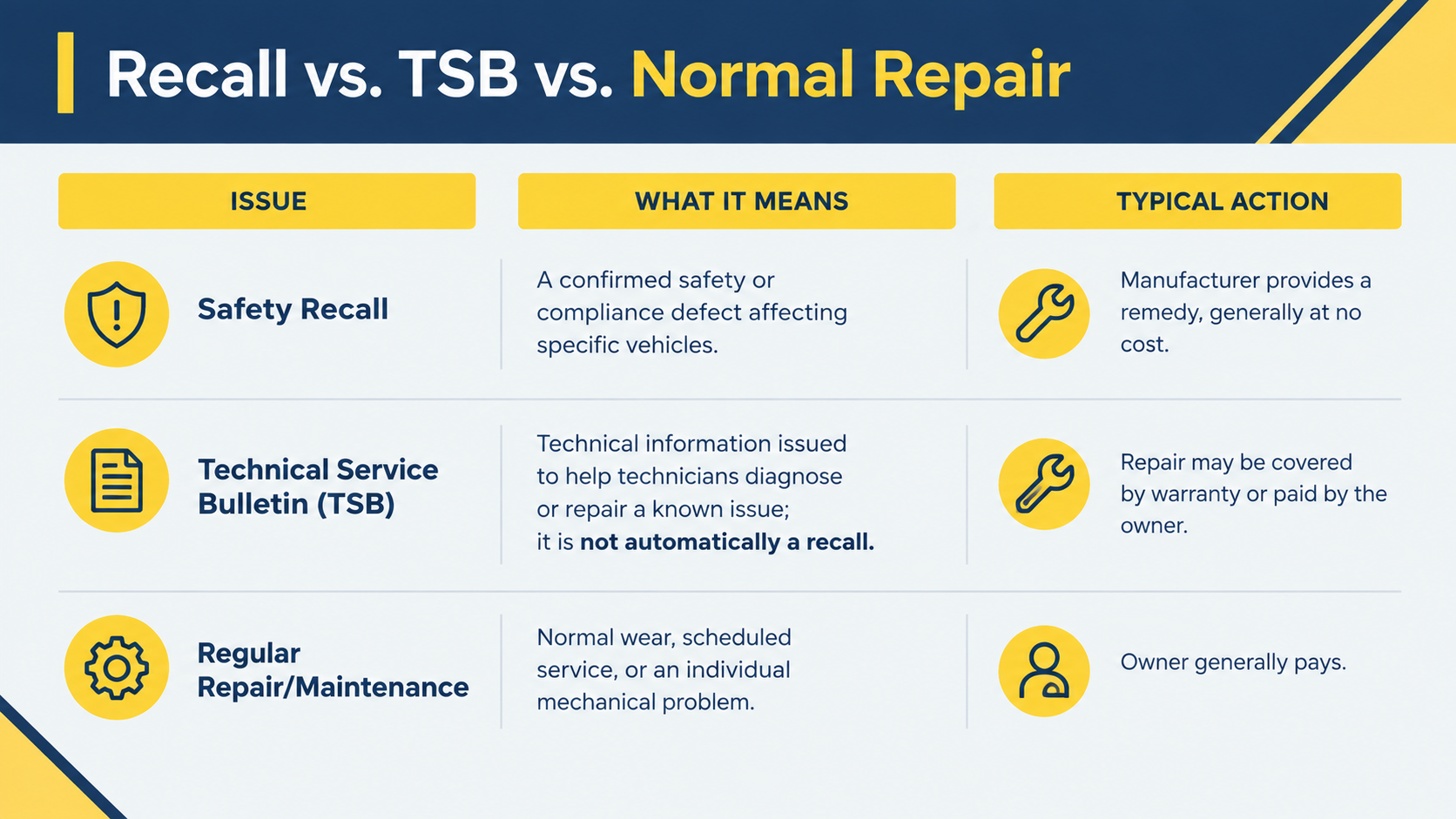
Generally, yes—safety-related recalls are free of charge when authorized by the MBW facility. However, a BMW recall differs from routine maintenance and repairs. These are not free.
Common BMW recall Issues include:
Airbags, fuel systems, braking systems, electrical systems (wiring, batteries, charging components, or electronic modules), steering components, engine components, and safety-related software or technology.
Yes—if the older car qualifies for the recall campaign. Just because a car is old doesn’t mean it can’t have an open recall.
NHTSA notes that recalls do not expire, although U.S. federal law limits the manufacturer's obligation to provide a free remedy to vehicles less than 15 years old when a defect or noncompliance is determined.
Don’t assume “My BMW is too old to have a recall.” Check your 17-character VIN to identify vehicle-specific safety and emissions recalls.
A BMW recall happens when the manufacturer (company) discovers a noncompliance defect in the vehicle and issues a public notice for affected owners to have it fixed for free. On the other hand, BMW repairs cover specific faults, wear, or damage caused by mileage, age, the environment, or a collision—the owner pays the bills
After a thorough inspection and a BMW recall repair, technicians often find other unrelated issues. In a situation like this, owners should understand BMW-specific diagnoses for separate issues.
So, you should basically ask these questions before authorizing the repair:
Now, there’s a balance.
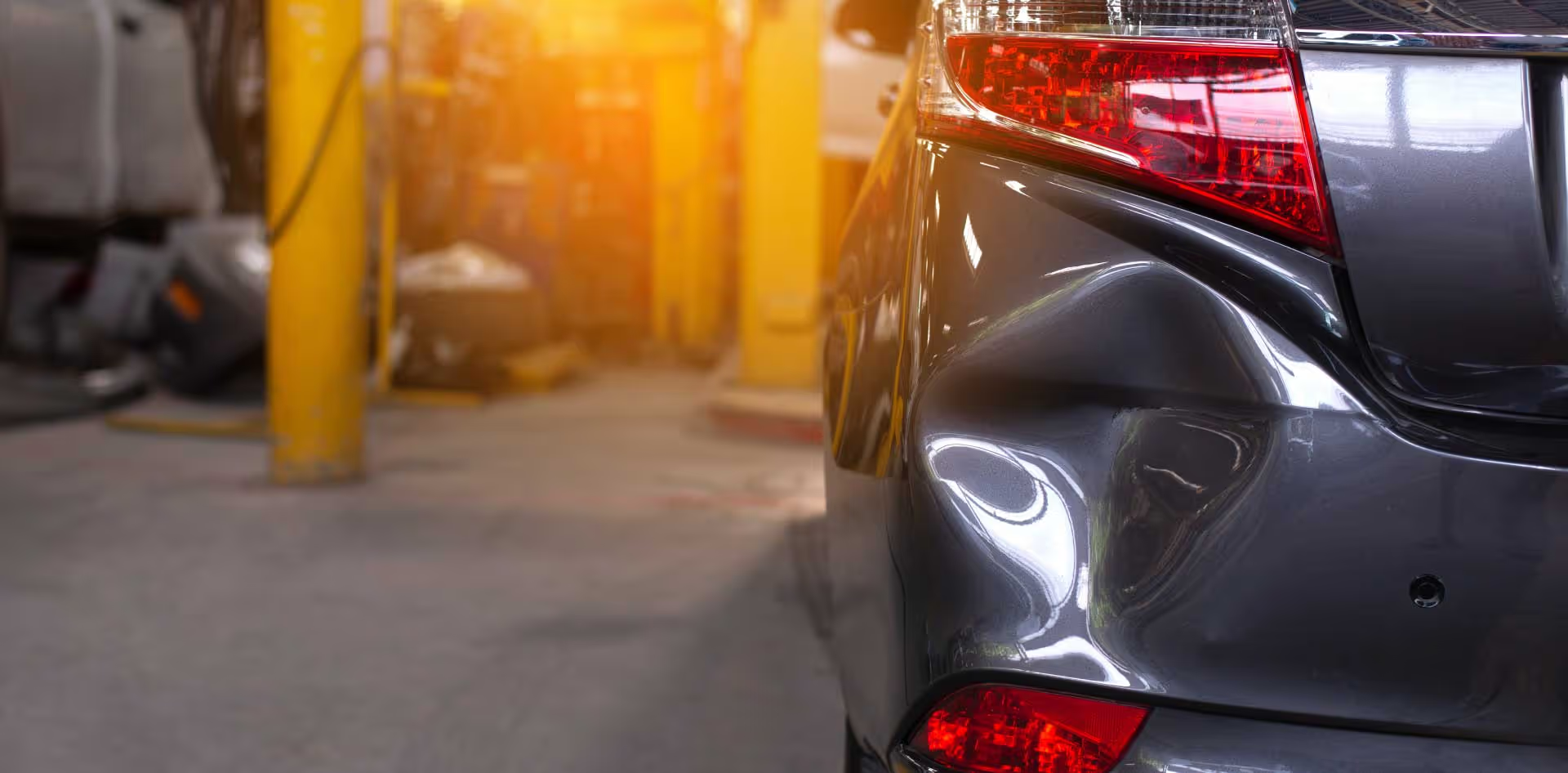
Collision damage is basically vehicle-specific damage, not a BMW-specific recall defect. For example, a recall might involve a defective brake, airbag, fuel system, or electronic component. Collision damage can involve bumpers, body panels, cameras and radar sensors, Airbags and seat belts, Suspension components, Structural/frame components, ADAS components, and mounting points.
Keeping track of BMW recalls and repairs is important not only for immediate needs but also for future buyers or appraisers to see how the vehicle was repaired.
So keep the following records:
For used BMW buyers
Check the VIN for outstanding recalls before purchasing to know what to do next. Don’t get comfortable with the sellers. “Everything has been fixed. You need not worry about anything." Make sure you see it and know for yourself.
For BMW owners preparing to sell
Show the buyer the documents for outstanding or resolved recalls. It helps the buyer understand what’s settled.
Understanding the difference between a safety recall repair and a vehicle-specific repair, plus how to know if your BMW has an open recall, will save you time, effort, and money.
If you need any clarity about BMW-related issues, you can always consult the Regal Repair team for assistance.
You can go to the BMW recall database and input your Vehicle’s 17-character VIN to verify its recall status.
Yes. BMW safety recall repairs are free because the manufacturer takes responsibility for factory-related defects.
Depending on the type of recall and the workload of the authorized recall facility, it can take anywhere from an hour to a full day.
Yes. Older BMW vehicles are not exempt. You can check the BMW database for its recall status.
It depends. You can continue driving with some safety recall issues and pending repairs, but a critical safety recall may require you to stop driving until the issue is resolved. To make the right decision, you need to understand your vehicle’s open recall and the manufacturer's instructions.
Save even more at Regal Repair for all your collision repair needs. Take advantage of our special collision repair coupons and deals to get your vehicle back in shape without overspending. Whether it's a minor dent or major damage, our offers provide affordable, high-quality repair solutions. Don't miss out on these limited-time discounts — explore our deals today and ensure your car receives the best care at the best price! Please mention the website coupon at the time of the vehicle estimate.


.webp)
.png)
.webp)
.avif)
.webp)